
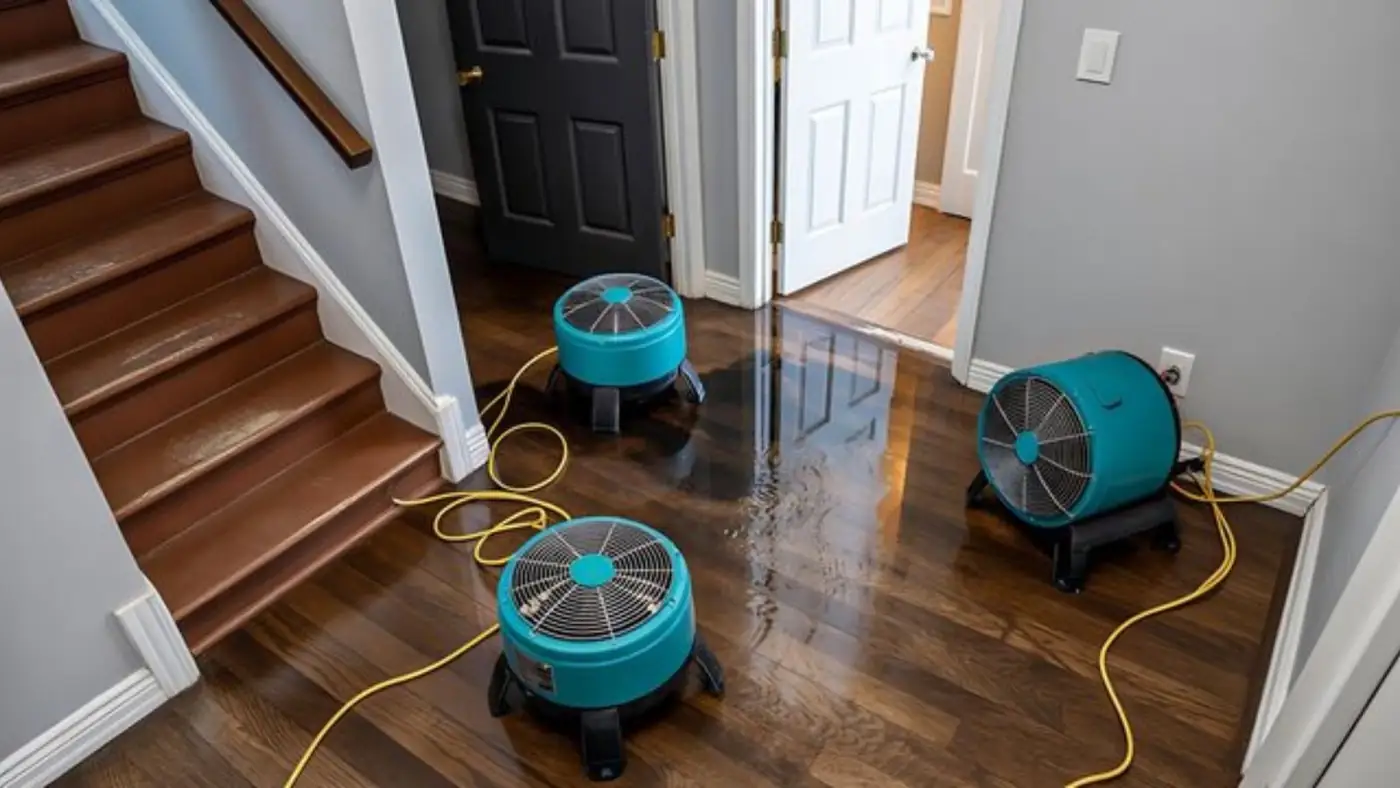
You walk across the living room and the oak feels wavy under your socks. The board edges catch the light differently, and there may be a faint sour smell near the seams. Hardwood floor water damage repair is the work of drying solid wood boards back to their normal moisture level, then deciding whether they can be refinished, patched or replaced.
This post is about solid hardwood only, the kind milled from a single piece of oak, maple or similar wood and nailed to the subfloor. Engineered and floating floors behave differently, and they are covered in a separate post on the first 48 hours.
What cupping, crowning and gapping tell you
Cupping means the edges of a board sit higher than its center, like a shallow tray. It happens when the underside of a board is wetter than the top, because the bottom swells first. Cupping after a leak or a damp slab usually points to moisture arriving from below.
Crowning is the reverse. The center rises and the edges sit low. It often appears when a cupped floor was sanded flat while the boards were still damp, then finished drying and shifted. A crowned floor is a sign that sanding came too soon.
Gapping is the other end of the cycle. As boards dry they shrink, and cracks open between them. Some gapping after drying is normal, especially on wide plank oak. Gaps that open weeks later in only a few rooms suggest the floor dried unevenly.
- Cupping with a hollow, springy feel: water is likely coming from below, so the subfloor or crawlspace needs a look.
- Humps that push boards together: heavy swelling, and the floor can lift off the subfloor. Call right away.
- Dark rings at nail holes or board ends: water sat long enough to affect the wood, not just the finish.
- White haze under the finish: moisture is trapped in or beneath the coating.
How long boards need to dry before any sanding
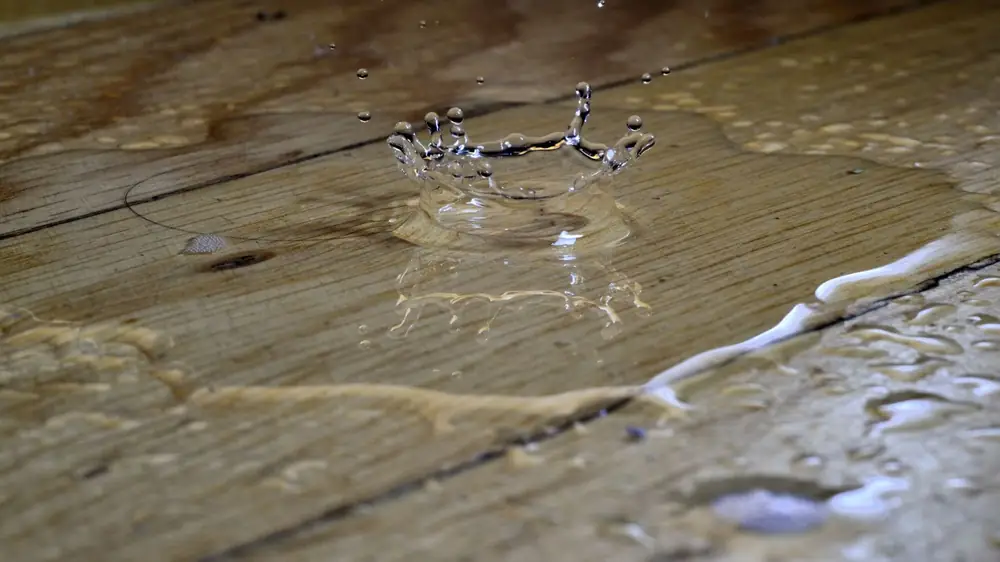
Do not sand a floor because it looks dry. Wood holds water deep in the board, and the surface can feel normal while the core is still wet. Sanding wet boards removes material unevenly, and the floor then crowns or gaps as the moisture leaves.
Drying solid hardwood is slow work. Many jobs take several days and some take weeks. Under a drying plan, crews use air movers, LGR dehumidifiers and sometimes drying mats that pull moisture up through the boards. Thick oak strip flooring dries slower than thin boards, and a floor over a crawlspace dries differently than one over a slab.
The goal is not one fixed number. It is the reading the same floor shows in a dry part of the house, held steady for a couple of days in a row. A pin or pinless moisture meter, used on both the boards and the subfloor, is how a crew decides when the wood is ready to be judged.
Never crank up heat to speed things along. Hot, dry air dries the top face quickly while the underside stays wet, and that mismatch splits boards and deepens cupping. Steady, controlled drying wins over fast drying.
Sand and refinish, replace boards, or replace the floor
Once readings are stable, you are choosing among three repairs. The right one depends on how flat the boards came back, how much wear layer is left, and what sits under the wood.
Sand and refinish
Works when cupping is mild, the boards have flattened after drying and enough wood is left above the nails. Solid oak tolerates several sandings in its life, so past refinishes matter.
Replace boards
Fits damage in one spot, such as boards beside a dishwasher or a pipe. New boards are woven into the pattern, then the connected floor is sanded so the finish blends.
Replace the floor
Needed when most boards stay cupped after drying, nails have pulled loose, or the subfloor beneath is damaged. Black staining after days of soaking also points this way.
Hold the decision
Boards that look bad on day two can improve as drying finishes. A sound plan waits for stable readings before anyone orders lumber or rents a sander.
Ask whoever quotes the job whether the price covers the whole connected floor or only the damaged boards. A patch in one corner of an open living room often means sanding the entire run so the color matches. That is where cost climbs, and scope and price are explained before work starts.
Hardwood runs through the whole house in older Valley homes
A 2006 description of Valley Village called most houses there single-story Spanish and ranch-style homes of about 1,700 square feet, many built in the 1930s. In homes like that, hardwood often runs through most of the living space. A leak in the kitchen or hall can touch one continuous floor, so ask whether the repair plan treats the whole connected run. We send the crews we dispatch to Valley Village with moisture meters to map that run.
Sherman Oaks was founded in 1927, so floors in older homes there may have been refinished more than once. Ask how much wear layer remains before choosing sanding, because a thin floor may not survive another pass. The same question applies if you live in the area served by our Sherman Oaks team.
Wet hardwood right now?
Call (818) 337-2642 and we will explain the drying plan before work starts.
What happens when moisture is trapped under the finish
Polyurethane and similar coatings seal the top of the board. That protects against spills, but it also slows drying from above. Water that enters through seams or from below can sit under the finish where you cannot see it.
Warning signs include cloudy or white patches, finish peeling at board edges, and a floor that feels damp or smells musty weeks later. Rugs, plastic sheeting and furniture left on a wet floor make it worse, because they stop the air from reaching the wood.
Never seal or recoat over wet wood. Fresh finish on trapped moisture can cloud, bubble or peel, and the boards still have to dry with an extra barrier on top. Mold needs moisture to grow, so a lingering musty smell is a reason to have the floor and subfloor checked.
The first day, step by step
Stop the source
Shut off the leak or have the plumber fix it. Water that keeps arriving turns a drying job into a rebuild.
Clear the floor
Lift rugs, furniture legs and anything else resting on the boards. Soak up standing water with towels.
Move air gently
Run fans and open windows if the outdoor air is dry. Skip space heaters and hair dryers on the floor.
Photograph and call
Take wide and close photos of the boards before anything moves, then call so a crew can take readings.
If water reached outlets or the panel, stay out of the room. Cut power only if the panel is dry and safe to reach, and call 911 or the utility for any electrical or gas risk before calling us. Sewage in the water changes everything, so keep out and call right away.
Insurance and who decides
Sudden and accidental damage, like a burst supply line, is often covered by homeowners policies, while a slow leak under a sink that went unnoticed often is not. Flood is usually excluded. Check your policy or ask your insurer how it treats your situation, and keep the photos and moisture readings, because they help explain what happened.
Our crews can describe what they see and measure, but the coverage decision belongs to your insurer. Ask any company you hire whether its crews work to the ANSI/IICRC S500 standard for water damage restoration.
Can cupped hardwood go flat again?
Often, yes, if the cause is stopped and the boards dry slowly and evenly. Mild cupping can relax over days or weeks. Severe cupping, pulled nails or boards that stay deformed after readings stabilize usually mean replacement.
How soon can I sand after a leak?
Only after moisture readings on the boards and the subfloor match a dry reference area and stay steady. That is days to weeks, not hours. Sanding early locks in crowning and gapping once the wood finishes shrinking.
Does a water spot on one board mean the whole floor is ruined?
No. Many floors need only a handful of boards replaced. The harder question is color match, which is why contractors often sand the full connected room afterward.
My Valley Village house has hardwood in almost every room. Does a kitchen leak put all of it at risk?
It can. Many single-story 1930s-era homes there have one continuous floor, and water can wick into neighboring boards or travel under the finish. A moisture map of the adjoining rooms shows how far it went.
Is it safe to walk on a wet hardwood floor?
Walk lightly and avoid dragging furniture, since swollen boards can lift and finish can peel. If the water came from a drain, a toilet or any source that may carry sewage, stay off and call us.