
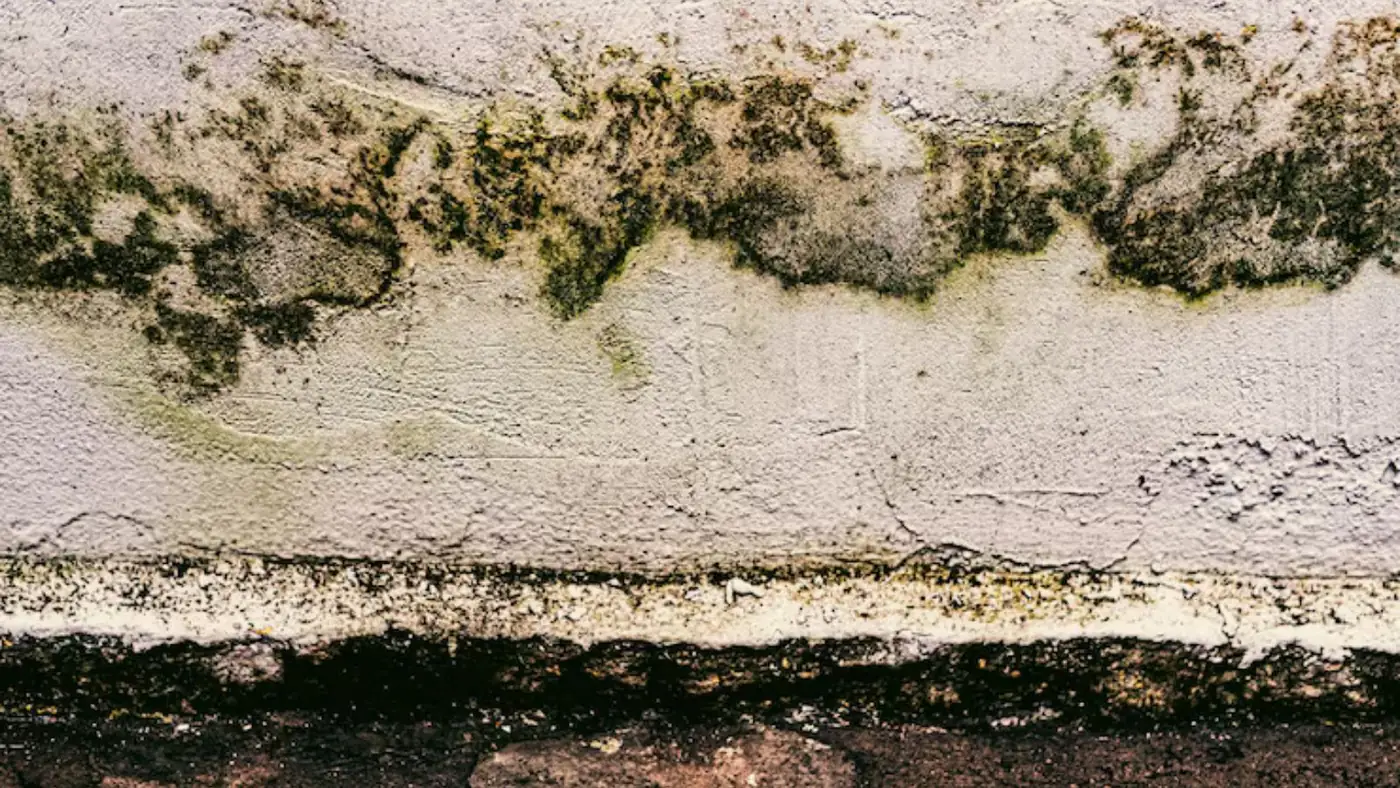
Wood grows mold when it stays damp, whether that is a cabinet under a sink, a fence board in shade or a rafter in an attic. To remove mold from wood, you clean the surface, dry the board and judge whether growth went below it. Sealed wood is easy. Bare, soaked wood is not.
This guide stays with wood, including framing, trim, furniture, decks, fence boards and cabinets.
Porous or sealed wood
Wood is a porous material, but finish changes how it behaves. Varnish, polyurethane or thick paint seal the surface. Mold on a sealed tabletop sits on the coating and wipes off. Bare framing, unfinished fence boards and the back of a cabinet have no such barrier.
Water enters wood along the grain. Growth follows it. A board can look clean on the face while the end grain, which drinks water fastest, is darkened and soft. Press a screwdriver tip into the board. If it sinks in easily, the wood is compromised.
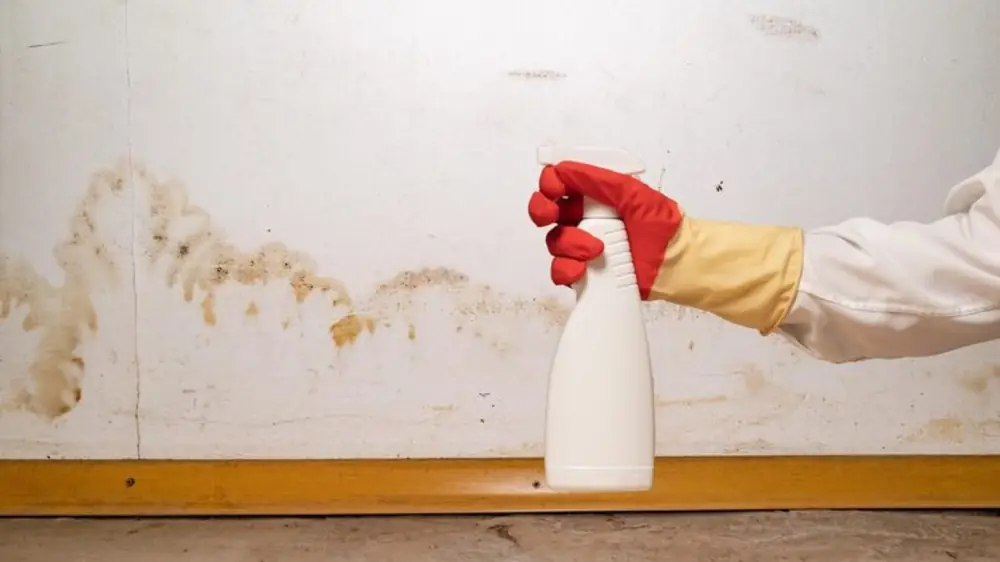
Surface mold versus growth that penetrated
On finished wood, surface mold shows up as a thin film or specks. On bare wood, penetrating growth stains the fibers dark and stays after wiping. Colour does not identify a mold type, so judge by depth, not shade.
Check three things. First, scrape lightly to see how deep the stain goes. Second, read the moisture with a meter. Third, look for rot, which shows as crumbly, stringy or sponge-soft wood. Rot is a structural issue, not just a cleaning one.
EPA says mold on hard surfaces can be scrubbed with detergent and water and dried completely, and that porous materials may have to be thrown away. Wood sits between those two ideas.
Cleaning, dry-brushing and sanding in plain words
Detergent and water
Best for sealed or finished wood. Scrub gently, wipe, then dry fully with air movement. Do not leave the wood damp.
Dry-brushing
A stiff brush removes surface growth from rough bare wood. It sends spores and dust airborne, so it needs containment and a HEPA vacuum.
Sanding
Removes the top layer of stained fibers. Only works if growth is shallow. It makes a lot of fine dust.
Replacement
When wood is soft, rotted or deeply stained, cutting out and replacing the piece is the cleaner answer.
We do not give chemical mixing instructions, and you should never mix cleaning products. Plain detergent and water follows the EPA approach for hard surfaces.
Why containment matters when you sand
Sanding and brushing break growth into dust that floats through the house. A sander can spread fine particles to rooms far from the work. Containment means closing off the area with plastic sheeting, taping seams, and using a HEPA air scrubber or a fan exhausting outdoors.
Wear an N95 respirator or better, goggles and gloves. Vacuum with a HEPA vacuum, not a household one. Work stops and a pro gets called if the job grows beyond a few boards.
Not sure if the framing can be saved?
Call (818) 337-2642 any hour. Same-day response when available.
Cleaned in place or replaced: framing
Structural framing such as joists, rafters, studs and sheathing is often cleaned in place when it is firm. A crew removes surface growth by HEPA vacuuming and mechanical cleaning inside containment, then dries the wood. The ANSI/IICRC S520 standard guides this process, so ask any company whether its crews follow it.
Framing is replaced or sistered with new lumber when it is rotted, soft or cracked. A structural engineer or building inspector may be involved if load-bearing members are compromised. Plywood sheathing that has delaminated generally comes out.
Trim, baseboard and cabinet boxes are usually replaced if soaked. They cost less to replace than to treat, and they hide a lot of damp.
Drying wood to a safe level with a meter
Fix the leak or shade
Stop the water source or dry the area. Wet wood cannot dry while still being wetted.
Move air
Use air movers and a dehumidifier. Open the cavity so air reaches both faces of the board.
Read the meter
Pin or pinless moisture meters show wood moisture content. Compare to dry wood in the same room.
Confirm before closing
Do not paint, seal or cover wood until readings match your dry reference and stay stable.
EPA says to dry water-damaged areas within 24 to 48 hours and keep indoor relative humidity below 60 percent, ideally 30 to 50 percent. Our water mitigation crews use meters and dehumidifiers to track drying board by board rather than guess.
Outdoor wood: decks, fences and furniture
- Scrub with detergent and water and a stiff brush, then rinse and let the wood dry in sun and airflow.
- Trim plants back so air moves around fence boards and deck rails.
- Check the underside of deck boards and the joists, where damp hides.
- Replace boards that are soft or split along the grain.
- Reseal bare wood after it dries fully, not before.
Hillside decks, canyon shade and wood that stays damp
Hillside homes and decks below Mulholland Drive and along the canyon roads get shade and damp from slopes, trees and cool mornings. Outdoor wood in those spots holds moisture longer than wood on a sunny flat lot. If your deck or fence is shaded most of the day, inspect the underside each season and trim back plants so air can reach it.
In Valley Village, many houses date from the 1930s. Older raised floors and crawl space framing can hold damp for years, so check subfloor joists after any plumbing leak. Condo and apartment residents should report moisture to the building owner or HOA right away.
Furniture and cabinets
Solid wood furniture with a finish can often be cleaned and dried. Particleboard or MDF cabinets swell with water and rarely recover. Cabinet backs and toe kicks next to a dishwasher are a common hiding spot.
If a homeowner in Sherman Oaks finds a soft cabinet base, pull the cabinet contents, look behind for the leak source and call before removing it, so the wall and subfloor can be checked too.
Can sanding remove mold from wood?
It can remove shallow staining on bare wood, but it creates dust. Do it only with containment, a respirator and a HEPA vacuum, or leave it to a pro.
Should I replace moldy framing?
Firm framing is often cleaned in place. Soft, rotted or cracked framing is replaced. A moisture meter and a hands-on check decide it.
Is painting over moldy wood okay?
No. Paint seals in moisture and growth. Clean, dry and confirm the wood is stable first.
My deck is below a canyon road in Studio City and stays shaded. What should I do?
Shade and damp keep outdoor wood wet. Trim plants back, check the underside, scrub with detergent and water, and replace soft boards.
Does mold on wood cause health problems?
Health questions belong to a physician. Our focus is the building materials and the moisture behind them.