
Where appliance leaks start and why they spread
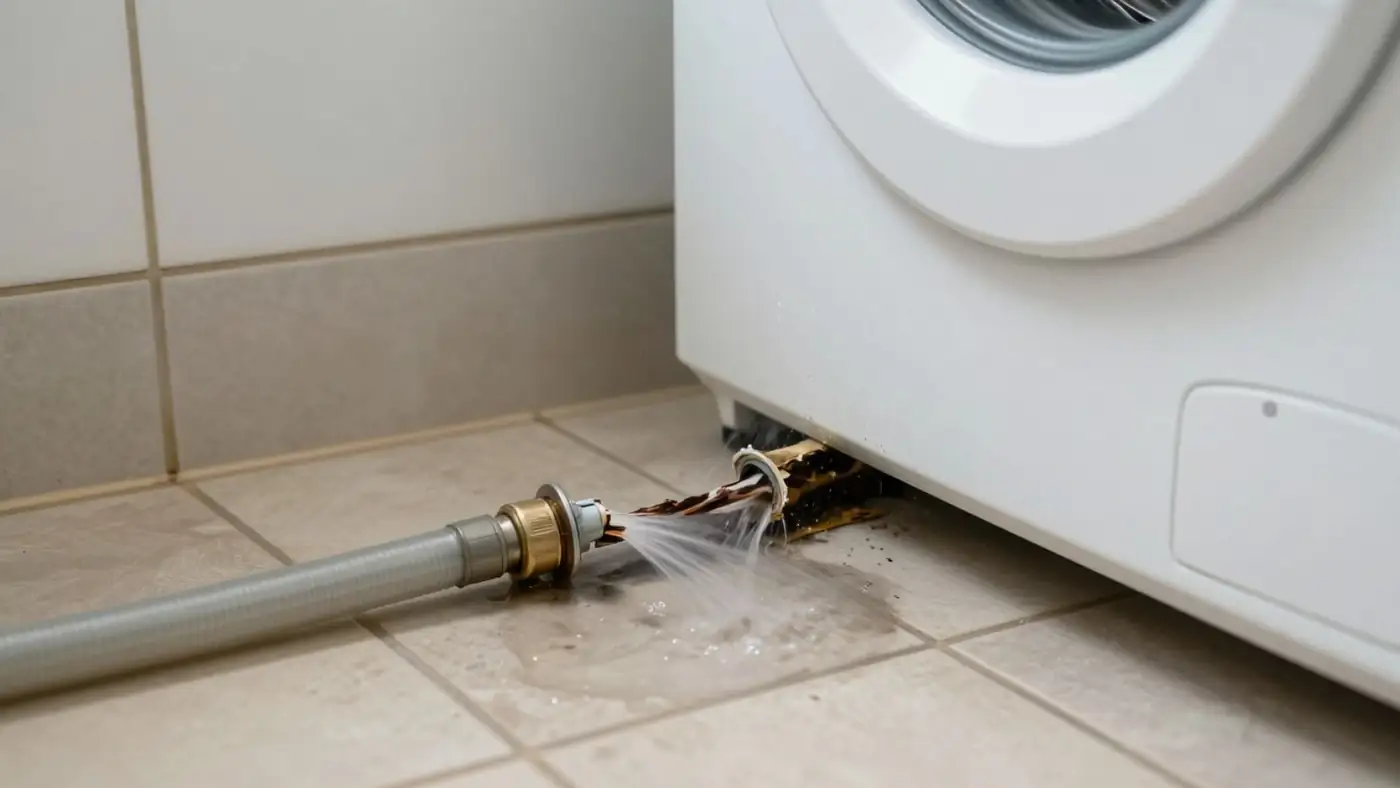
Appliance leak water damage is the wet floor and wall damage caused when a machine hose or drain line fails. The machine itself usually looks fine. The water comes from the rubber or plastic parts that connect it to the wall.
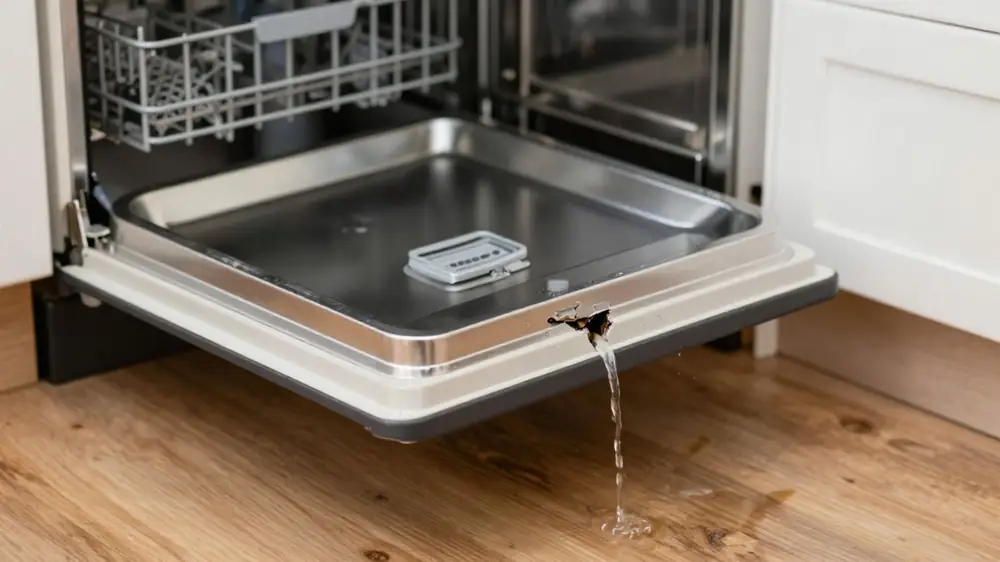
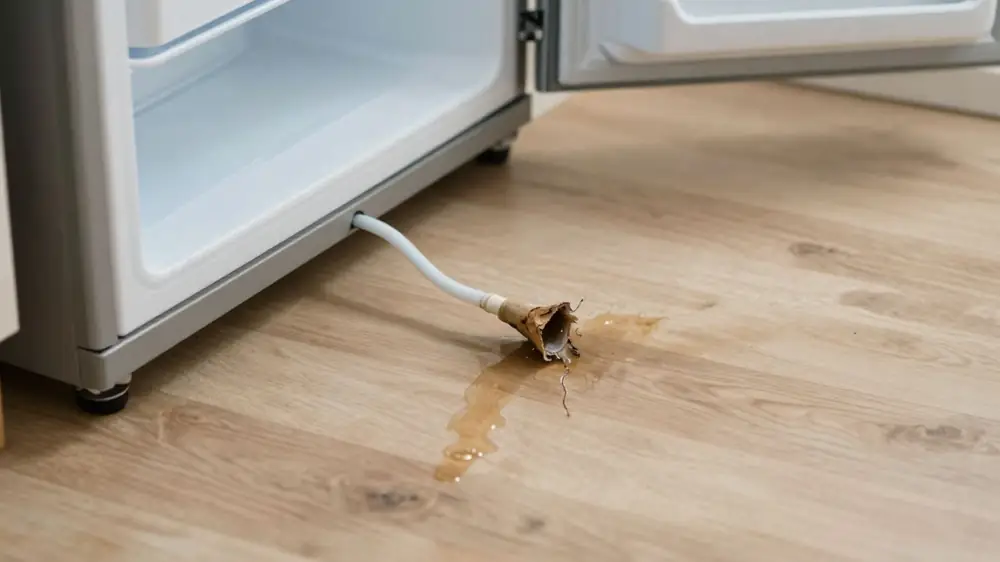
Washing machines cause the biggest losses because they run on two lines. A supply hose is under household pressure all day, even when the machine is off, and a drain hose can pop off the standpipe during the spin cycle. A dishwasher has a supply line and a drain line under the sink. A refrigerator or freezer has a thin ice maker line and a defrost drain that can clog and back up.
Where the machine sits matters as much as what failed. A laundry closet in an apartment sends water through the floor into the unit below. A garage washer sends it across a slab. This page is organized by cause, and the kitchen water damage page covers what happens to cabinets and kitchen finishes.
Slow weep or sudden failure
| Type | What it looks like | What it does to the building. |
|---|---|---|
| Sudden hose burst | Water everywhere in minutes, often while you are out | Large volume, wide spread, usually caught the same day. |
| Drain hose pops off | Water on the floor after a wash or spin cycle | Moderate volume, runs under cabinets and walls. |
| Slow weep at a fitting | Damp spot, musty smell, warped floor edge | Small volume over weeks, deeper material damage. |
| Ice maker line drip | Wet cabinet floor behind or beside the fridge | Hidden damage under flooring and in the wall base. |
| Defrost drain overflow | Water pooling under the fridge | Slow spread into laminate or vinyl planks. |
| Stacked unit leak | Stain or drip on the ceiling below | Two units affected, owner and neighbor involved. |
How long a leak ran decides the scope more than how much water you can see.
How long it ran decides what is wet
A burst hose that ran for twenty minutes soaks the top layers. Carpet, pad and the lower few inches of drywall are the usual casualties, and they dry well when caught fast. A weep that ran for a month has had time to soak the subfloor, rot the bottom plate of a wall and stain the ceiling below.
The U.S. EPA says to dry water-damaged areas within 24 to 48 hours to prevent mold growth, and that wet areas dried in that window usually will not grow mold. So if you find a leak that has clearly been running, act the same day and tell us how long you think it ran.
Safety steps for the first hour
Unplug the machine only if the outlet and the floor around it are dry. If water is pooling near an outlet, a power strip or a cord, stay out of it. Call 911 or the utility first if you see sparks or smell burning, then call us.
Close the machine's shut-off valve. Washers have two small valves on the wall behind them, dishwashers have one under the sink, and a refrigerator's ice maker line has a small valve on the cold pipe behind it. If the valve is stuck or underwater, shut off the main supply to the home.
Water on the floor now?
Call the 24/7 line and we will talk you through what to lift, what to leave and what to photograph.
How we dry an appliance leak
Extract and inspect
We pull standing water, then use a moisture meter and thermal camera at the baseboards, the cabinet base and the wall behind the machine.
Remove soaked materials
Wet pad, baseboard and soft drywall come out. In a laundry closet that often means cutting back the wall base so air can reach the cavity.
Dry the cavities
Air movers push air across the floor and LGR dehumidifiers pull moisture from the room. Drying mats go on suitable flooring.
Confirm and report
We read the same spots again until they match dry reference readings, then give you the notes and photos for your insurer or landlord.
A plumber or appliance technician replaces the hose, valve or machine. We do not repair appliances, and we schedule around whoever is fixing the source. If carpet is involved, our carpet water damage page explains when it is dried in place and when it comes up.
What changes the cost of an appliance leak cleanup
Before work starts the scope is walked through. Totals shift with:
- Duration. A weep that ran for weeks has more wet material than a burst caught at once.
- Floor type. Carpet and pad come up fast. Laminate, vinyl plank and wood take longer to dry or may be replaced.
- Number of rooms or units. A laundry closet leak that reaches a hallway and the unit below needs more equipment.
- Wall and cabinet involvement. Water that wicked into a wall base adds cutting and drying.
- Access to the machine. Moving a washer or fridge safely is part of the job.
Insurance, landlords and what to photograph
Sudden and accidental damage is often covered by a homeowners or renters policy, and gradual leaks and neglect often are not. The California Department of Insurance notes that flood is typically excluded, which does not apply to a hose failure but matters if outside water was also involved. Ask your insurer which category your loss fits.
Photograph the failed hose or fitting before it is thrown away, the machine's position, the wet floor, the stained ceiling below and any water line on the wall. Most households in the City of Los Angeles rent, according to U.S. Census Bureau QuickFacts, so send those photos and a dated message to your landlord or manager the same day.
Preventing the next appliance leak
- Replace rubber washer hoses with braided stainless hoses, and check them at the connection twice a year.
- Set a drip pan with a drain under the washer if it sits above living space.
- Shut off the washer valves when you leave town.
- Look under the kitchen sink and behind the fridge every few months for damp spots.
- Clear the defrost drain and keep the fridge level.
- Use an outdoor-vented dryer and exhaust fan, as the U.S. EPA advises for moisture-producing appliances.
Apartments, condos and shared floors in Studio City
Studio City sits in the southeast San Fernando Valley, in the City of Los Angeles, and much of the housing near Ventura Boulevard is apartments and condos. In a stacked building a washer leak is rarely only your problem, because water crosses the slab or floor assembly into the unit below.
Valley Village next door has a large stock of apartment units, and its western edge follows Tujunga Wash. We respond there, see Valley Village, and in North Hollywood, where about three quarters of housing was renter-occupied in the 2000 census. In both, report the leak to the manager at once.
Appliance leak questions in Studio City
Is emergency appliance leak cleanup available in Studio City?
Yes. Machine leaks do not wait for business hours, and neither does the line. Pull the plug only if you can do it dry, and describe the hose or drain involved. A crew is sent the same day when available, without a promised arrival window.
My washer hose burst while I was at work. How wet is it likely to be?
Supply hoses run under pressure, so a burst can run until someone shuts it off. We check the floor, wall base and any unit below with meters and a thermal camera.
Do braided hoses really help?
They resist bursting better than plain rubber hoses, but they still wear at the fittings. Check them at least twice a year and replace them on a schedule.
Who is responsible if my laundry closet leaks into the unit below?
That depends on the lease, the building and the cause. Tell the landlord or manager right away and ask your insurer. We document the damage in both units.
Can a dishwasher leak ruin the floor?
Yes, especially under the cutout, where water spreads into the cabinet base and subfloor. The kitchen page covers that.
Will you repair the appliance?
No. An appliance technician or plumber does that. We extract, remove wet materials and dry.