
What storm water damage means and what it does not
Storm water damage is rain-event water that enters a building without coming through the roof or rising as a flood. Think of rain pushed sideways through a slider, a clogged downspout that dumps water on a wall, or a yard drain that backs up at the garage door.
NOAA climate normals for downtown Los Angeles, not Studio City itself, show about 14 inches of rain in an average year, falling mostly from late fall through winter. January and February are the wettest, and May through October are very dry. Drains, caulk and gutters sit untested for months, then face a storm all at once.
Two nearby topics are different. Rain entering through the roof is covered in roof leak water damage. Moving or rising floodwater and sewage belong to flood damage restoration.
How storm water finds its way in
Wind-driven rain
Rain pushed sideways gets past window frames, sliding door tracks and weep holes that stay dry in a normal shower.
Gutters and downspouts
Clogged gutters overflow against the wall, and a downspout that dumps at the foundation sends water toward the slab and garage.
Yard and driveway drains
When a drain is overwhelmed, water backs toward doors and ponds against walls.
Runoff into low rooms
A garage, laundry or lower room below the street can collect water from a sloped driveway.
Mud and debris
Runoff carries soil, leaves and trash into doorways and yards, which means cleanup as well as drying.
Tree limb damage
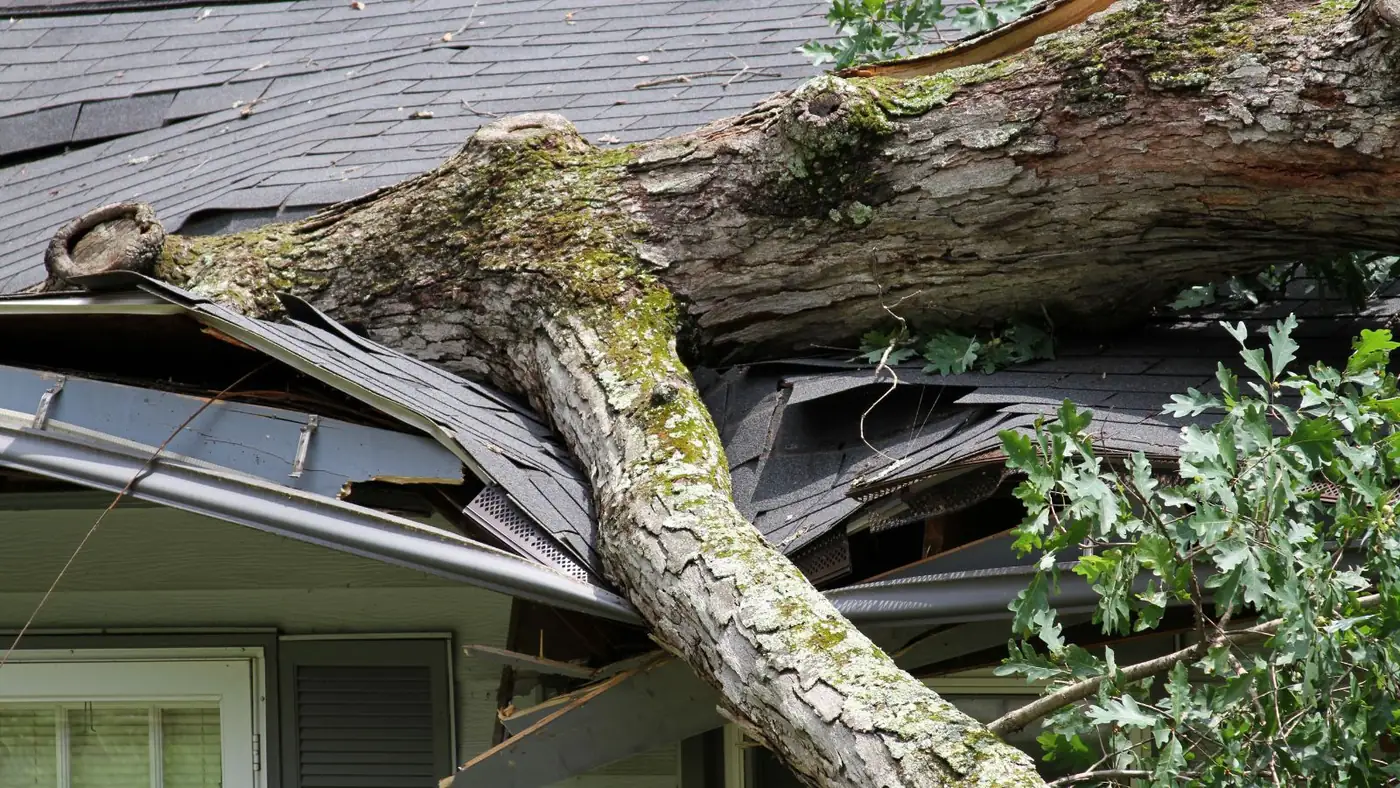
A fallen limb can break a window or crack a roof edge and let rain pour in until it is covered.
Safety steps for the first hour
Stay out of rooms with standing water if outlets, cords or the panel are wet. Cut power at the panel only if the panel is dry and you can reach it safely, and call 911 or the utility about downed lines, sparks or a gas smell before calling us.
Do not walk through moving water outside, and keep children and pets away from runoff, because it can carry mud, chemicals and debris. If the water looks gray or smells of sewage, treat it as contaminated and keep out.
When it is safe, lift belongings onto dry furniture, pull up wet rugs and photograph each wet spot. Move vehicles and valuables out of low garages only if the water is not moving.
Our process for storm water cleanup
Extract the water
Extraction units remove standing water from floors, carpet and garage slabs, and a crew removes mud and debris carried in by runoff.
Map the moisture
Moisture meters and a thermal camera find water that wicked into wall bottoms, baseboards and subfloors, even where the surface looks dry.
Remove what will not dry
Wet carpet pad, soaked insulation and waterlogged drywall at the base of walls are cut out. Crews work in line with ANSI/IICRC S500, the published water damage standard.
Dry and verify
Air movers, drying mats and LGR dehumidifiers run until readings are dry, with HEPA air scrubbers used where demolition creates dust.
Rain is done but your floors are wet
Call the 24/7 line and the dispatcher tells you what to move and what to leave while a crew is on the way.
Wet floors and walls dry on a clock
| Location | What the water did | What we do |
|---|---|---|
| Garage | Runoff pooled on the slab and soaked stored boxes. | Extract, clean the slab, sort contents, dry wall bases. |
| Living room by a slider | Wind-driven rain wet carpet and the wall bottom. | Lift carpet, pull the pad, dry the wall cavity. |
| Exterior wall below a gutter | Overflow soaked siding edge and drywall inside. | Meter the wall, open it if needed, dry the cavity. |
| Lower room or laundry | Water followed a slope in from the yard. | Extract, remove wet base materials, run dehumidifiers. |
| Room under a broken window | Limb damage let rain in until covered. | Extract, protect finishes, dry and note what needs rebuild. |
The U.S. EPA says to dry water-damaged areas within 24 to 48 hours to prevent mold growth.
What changes the cost and how insurance fits
A storm job depends on these points, and the quote is explained before any work begins:
- Area and depth of water. A wet garage corner is smaller than a whole lower floor.
- Mud and debris. Runoff that carried soil needs more cleanup before drying starts.
- Materials soaked. Carpet pad and insulation come out, while sealed hard floors may be dried in place.
- Access and timing. Fast drying limits demolition, while days of dampness usually add steps.
- Rebuild scope. Repair of drywall, paint and flooring is separate from cleanup.
The California Department of Insurance notes that homeowners and commercial policies typically exclude flood, mudslide and debris flow. Flood coverage comes through the National Flood Insurance Program from licensed agents, and a new policy generally takes effect 30 days after purchase. That wait means buying coverage during a storm is too late, so ask your insurer how rain, runoff and mud are classified on your policy.
Storm water damage near the river channels and the hills
Storm runoff in Studio City, CA
Studio City sits where the Los Angeles River and Tujunga Wash run as concrete-lined channels that merge just west of Colfax Avenue, next to Radford Studio Center. LA County Public Works says its flood control system includes hundreds of miles of open channels and thousands of miles of storm drains that carry storm water away from developed areas.
On the south side, the Santa Monica Mountains slope down toward Ventura Boulevard along roads such as Laurel Canyon Boulevard and Coldwater Canyon Avenue. Runoff on those slopes arrives fast, so a garage or lower room below a hillside driveway is the first place to look after a storm.
Next door, Sherman Oaks has the Los Angeles River on its northern edge, and North Hollywood grew on a high water table near Tujunga Wash. Both areas see wet ground conditions after heavy rain.
Mistakes to avoid and storm-season prep before the rains
- Do not wait for a dry day to call, because wet wall bases keep absorbing moisture.
- Do not run a household vacuum on standing water.
- Do not assume a dry surface means a dry wall.
- Clear gutters, downspouts and yard drains in October, before the first storm.
- Check that downspouts discharge away from the foundation.
- Re-caulk window frames and check slider tracks and door thresholds.
- Look at roofs, trim and large trees for loose parts and weak limbs.
- Move boxes off the garage floor onto shelves.
For the process after the water is removed, see water mitigation, and for drying the walls and floors, see structural drying.
Is emergency storm water damage restoration available in Studio City?
Yes. Storm calls come in waves, so the line stays open overnight and on weekends. Tell the dispatcher what is wet, and a crew is sent the same day when available. No exact arrival time is promised, and the dispatcher gives you things to protect meanwhile.
What counts as storm water damage versus a flood?
Storm damage here means rain getting in at windows, doors and drains, or runoff reaching a low room. A flood is moving or rising water, and that is a separate topic and a separate insurance policy.
Does homeowners insurance cover mud and debris?
Policies typically exclude mudslide and debris flow, according to the California Department of Insurance. Read your policy and ask your insurer how it classifies your loss.
Can I buy flood insurance after a storm starts?
A new NFIP policy generally takes effect 30 days after purchase, with exceptions for some lender requirements, so a policy bought during a storm will not respond to that storm.
Rain came under my sliding door. What should I do?
Lift the rug, photograph the wet floor and call. Water often wicks into the wall base and subfloor, which a meter can find and a surface check cannot.
A tree limb broke a window and rain came in. Who handles it?
Board or cover the opening if it is safe, call a glazier or roofer for the repair and call us for the extraction and drying inside.