
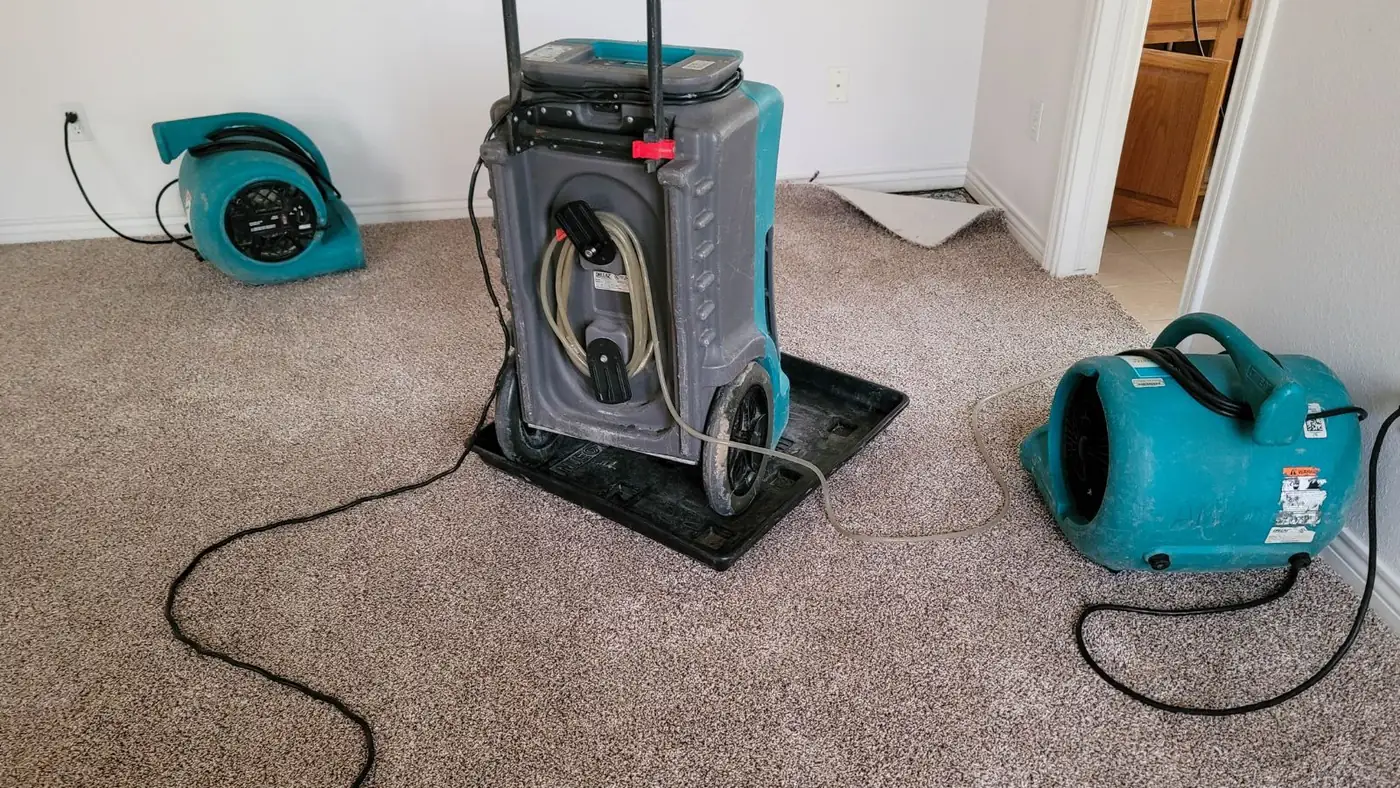
What structural drying and dehumidification actually do
Structural drying is the controlled removal of moisture from framing, subfloors, concrete, drywall and other building materials after a leak or flood. Dehumidification is the other half, because water leaving a wall has to go somewhere, and it goes into the air.
A crew works the two together. Air movers push dry air across wet surfaces so water leaves the material, and dehumidifiers pull that water out of the air so it cannot settle back into the next wall. Studio City sits in the southeast San Fernando Valley, in the City of Los Angeles, and the homes and apartments here are mostly stucco, drywall and wood framing that dry well when the process is managed.
The aim is not a room that feels dry. The aim is a building whose materials match a dry reference reading, which is the part this page explains.
Why the air matters as much as the wall
Drying is controlled by three air conditions: temperature, relative humidity and grains of moisture. Relative humidity is a percentage and changes with temperature. Grains of moisture is the actual weight of water in a pound of air, so it tells a crew how much room the air has left to absorb.
Dry air pulls water out of damp drywall and wood. Humid air cannot. The U.S. EPA advises keeping indoor relative humidity below 60 percent, ideally between 30 and 50 percent, so a crew watches the room against that range and pushes it lower during active drying.
How a crew finds every wet surface
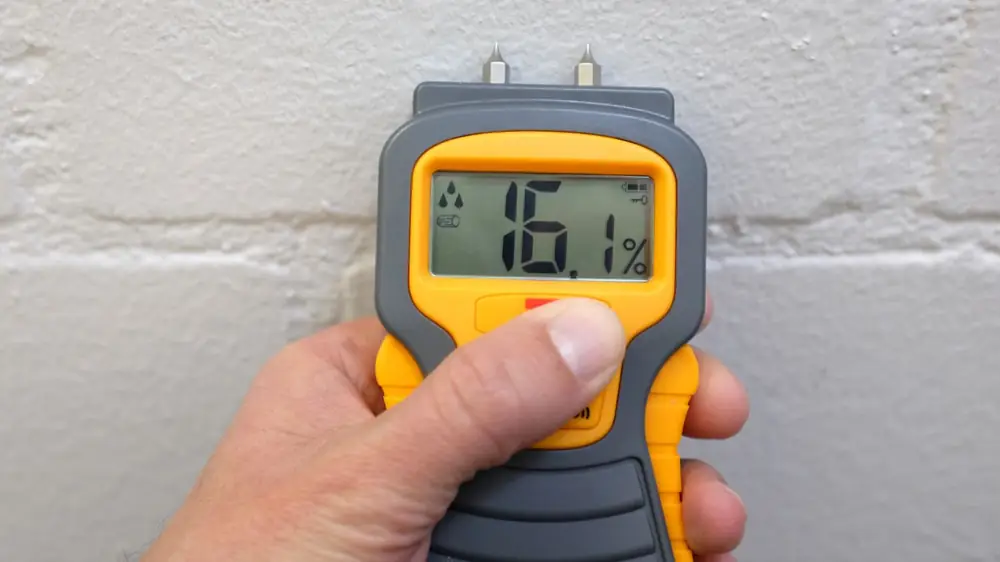
Moisture mapping starts with a moisture meter pressed into walls, baseboards, floors and cabinet bases. A thermal camera then sweeps the room for cool patches that suggest water behind the surface. The camera finds suspects and the meter confirms them, so neither is trusted alone.
Readings are marked on the wall or logged by location. That map shows how far water traveled, which is often well past the visible stain.
| Tool | What it shows | What it cannot do. |
|---|---|---|
| Pin or pinless moisture meter | How wet a specific material is | Read the whole room at once. |
| Thermal camera | Cool patches that may be wet | Prove a spot is wet without a meter check. |
| Thermo-hygrometer | Temperature, humidity and grains of moisture in the air | Show moisture inside a wall. |
| Dry reference reading | What normal looks like in the same material | Replace readings on the wet side. |
Goals are set from a dry reference reading taken on unaffected material in the same building.
Dehumidifiers, air movers and drying mats working as a system
An LGR dehumidifier, short for low grain refrigerant, pulls water from air that is already fairly dry, which standard units struggle to do. Air movers sit low along walls and push air across surfaces, which speeds evaporation. Neither works well alone, because air movers without dehumidification just circulate wet air.
Drying mats pull air through the gap under hardwood or other floor coverings. For walls, a crew can drill small holes or remove baseboard and a strip of board so air can flow through the cavity between studs. Cavity drying is why a wall that looks fine on the face may still get opened a little.
Safety steps while the building is still wet
Water and electricity do not mix. If water reached an outlet, a panel, a light fixture or an appliance, stay out of the wet area. Cut power at the panel only if the panel itself is dry and safe to reach, and call 911 or the utility for any electrical or gas risk before calling the restoration line.
Never run household fans or space heaters on wet floors. Keep windows and doors closed once drying starts. Open windows bring in outdoor air with its own humidity and make the dehumidifier work against the room instead of for it.
Not sure the building is dry?
Call the 24/7 line. A crew can check readings and tell you what is still wet.
Our drying process, day by day
Map the loss
The crew meters walls and floors, scans with the thermal camera and records air temperature, humidity and grains of moisture.
Set the equipment
LGR dehumidifiers, air movers and any drying mats go in based on the map, with goals taken from a dry reference.
Read and adjust daily
A technician returns each day, rechecks every marked spot and moves or removes equipment as areas dry.
Confirm and remove
When readings match the dry goals, the equipment comes out and the numbers are shared with you.
Placement changes daily because the wettest spots dry first. Leaving machines where they started wastes power on dry areas while stubborn spots, like a wall base or a corner under a cabinet, fall behind.
How long it takes and how we know it is done
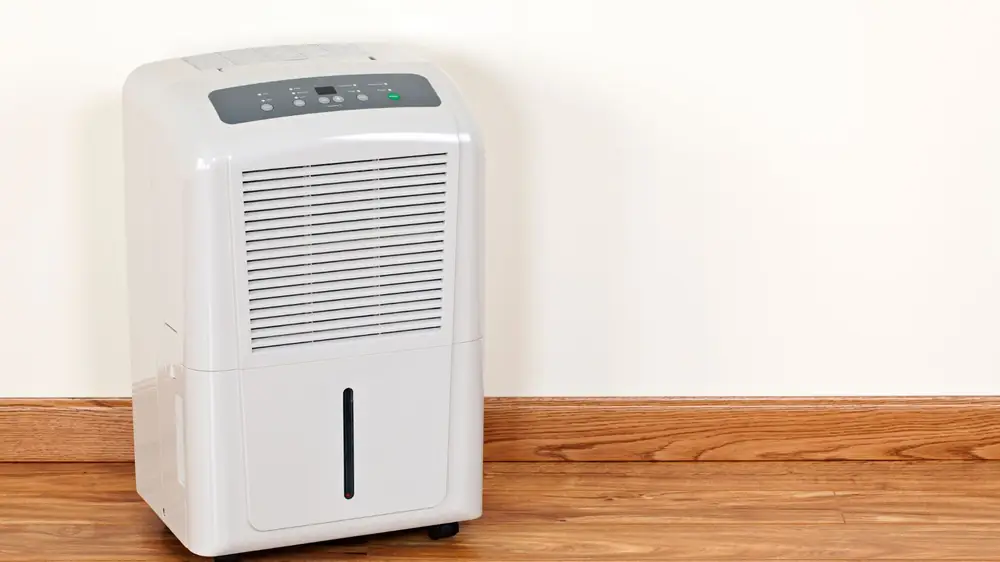
Drying takes days, not hours. Three to five days is typical for many jobs, though no one can promise a number, because thick framing, concrete slabs and long-wet materials take longer. Industry practice follows ANSI/IICRC S500, and you can ask any company whether its crews work to it.
A job is done when readings on formerly wet materials reach the goal set from the dry reference and the air is back in a normal range. The U.S. EPA says to dry water-damaged areas within 24 to 48 hours to prevent mold growth, which is why equipment goes in quickly and not after a long wait.
What to expect from noise and power use
Air movers and dehumidifiers are loud, closer to a steady fan roar than a hum, and they run around the clock. Many people find sleeping near them hard. Expect a noticeable bump in your electric use for the few days equipment runs.
Machines need dedicated outlets, so the crew spreads them across circuits to avoid tripping a breaker. If you rent, tell your landlord about the loss and the noise, since most households in the City of Los Angeles rent, according to the U.S. Census Bureau.
What changes the cost and how insurance fits
The price is explained first, and drying totals depend on:
- Area and materials. Concrete, thick framing and layered floors hold more water than a single wall.
- Water category. Contaminated water adds cleaning and removal before drying.
- Equipment count and days. Larger or longer jobs use more machines for more days.
- Access. Cabinets, built-ins and tight cavities take more labor to open and dry.
- Monitoring. Each daily visit and reading set is part of the work.
On insurance, sudden and accidental damage is often covered, gradual leaks and neglect often are not, and flood is usually excluded and needs separate flood coverage. Check your policy and ask your insurer. Daily readings and photos are the records most adjusters expect.
Mistakes to avoid while drying is under way
- Opening windows because the room feels stuffy, which lets humid air back in.
- Turning equipment off at night to save noise or power before the crew says the wall is dry.
- Moving air movers or unplugging dehumidifiers to vacuum or rearrange furniture.
- Assuming a dry-feeling wall is dry. Surface and cavity readings can disagree.
- Closing up or painting before readings are confirmed.
Drying in Studio City's climate and housing
NOAA climate normals for downtown Los Angeles, which is not Studio City and can differ in the hills and valley, show about 14 inches of rain a year and very dry months from May through October. That dry climate helps only outdoors. A sealed room with the windows shut still holds moisture, so the dehumidifier does the work, not the weather.
The same logic applies in nearby areas. In Valley Village, the 1930s houses have older framing and cavities that benefit from careful cavity drying. In North Hollywood, the early orchards relied on a high water table near Tujunga Wash, so slabs and low spots deserve a close look. For wet carpet and pad, see carpet water damage.
Structural drying questions in Studio City
Is emergency structural drying available in Studio City?
Yes. Drying equipment can be placed after any water loss, so call as soon as the standing water is gone or being removed. The line is open all day and night, and a crew is sent the same day when available, without a promised arrival time.
Why do crews come back every day?
Each visit rechecks every marked spot, moves equipment toward the wettest areas and removes machines from dry ones. Daily readings are how the goal is tracked.
What is a grain of moisture?
It is a unit of weight, used to measure how much water vapor is in a pound of air. Crews use it because it does not shift with temperature the way relative humidity does.
Can I just run my own fans and a store dehumidifier?
For a tiny, clean spill on a hard floor, maybe. For wet walls, carpet or anything that sat more than a day, household units rarely pull enough water, and they cannot reach the cavity.
Why must the windows stay closed?
Outdoor air carries its own moisture, and open windows change the room faster than the equipment can adjust. A closed room lets the dehumidifier control the air.
How do I know when the equipment can leave?
When readings on the wet materials match the goal set from a dry reference and the air is in a normal range. The crew shares the numbers.