
Why kitchen water damage is hard to see
Kitchen water damage is moisture trapped in cabinets, flooring and subfloor after a leak at the sink, dishwasher or plumbing run. A kitchen is built to look finished, so the water ends up behind panels and under surfaces that make it hard to find.
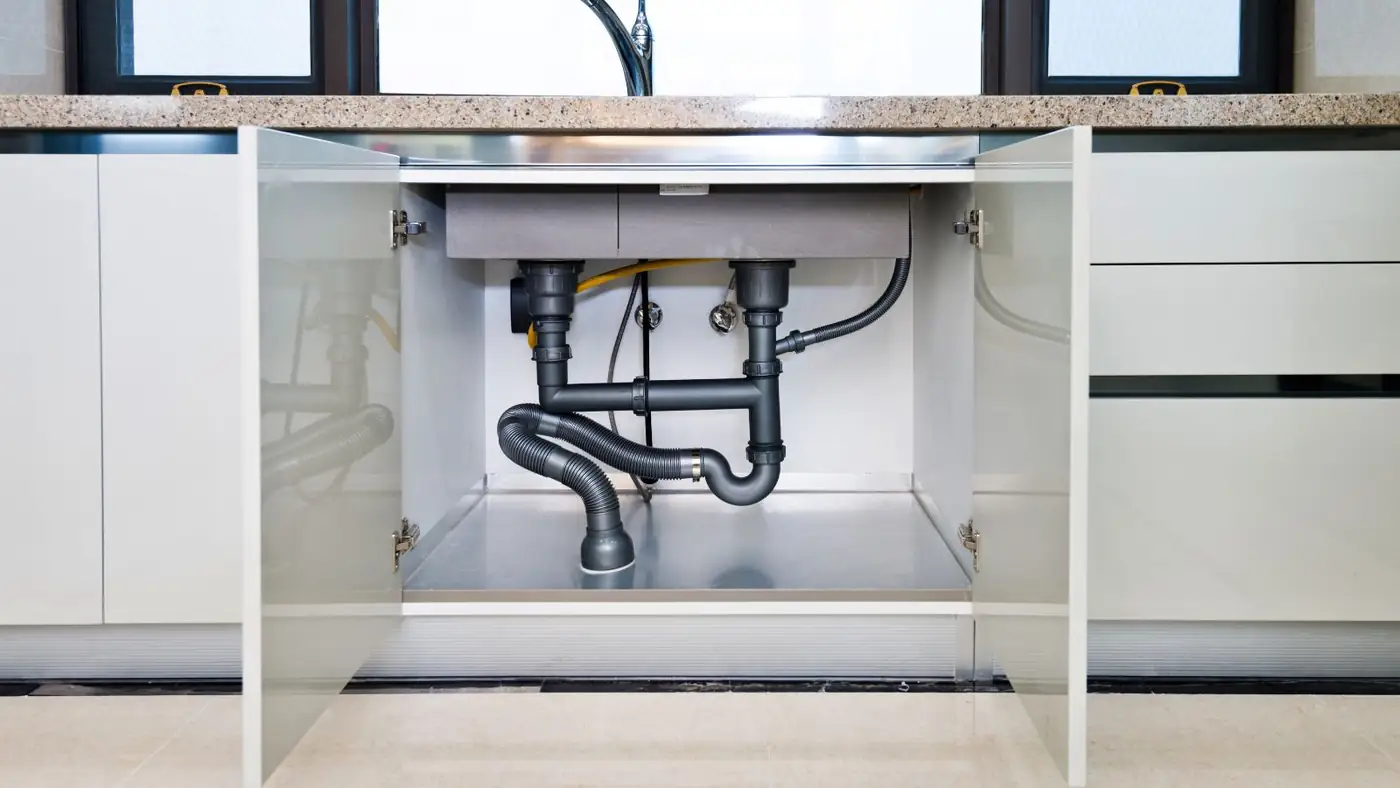
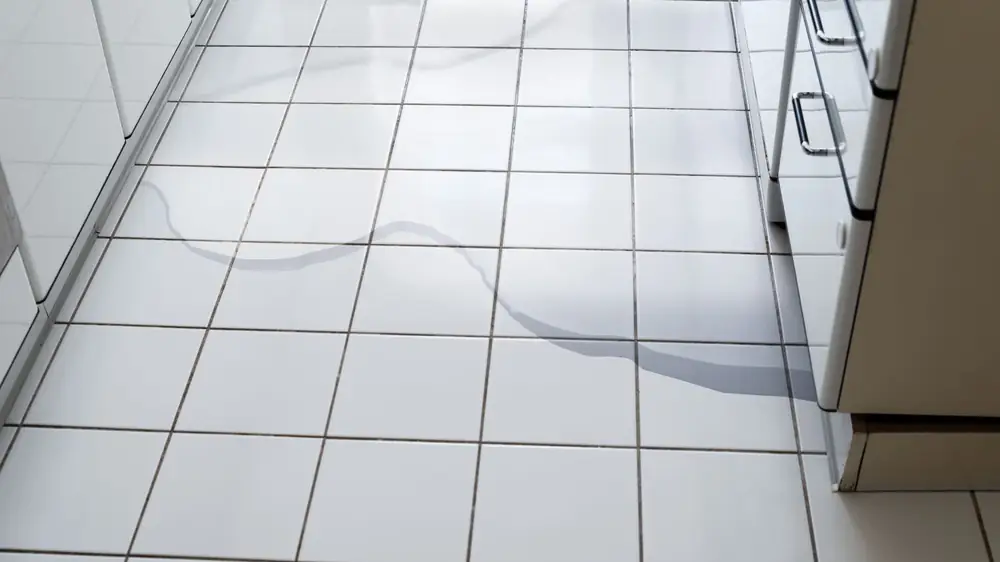
Most losses start below the sink. A supply line, a drain trap or a garbage disposal connection weeps into the cabinet base. From there water spreads to the sides, wicks into the toe-kick cavity and runs under the flooring. By the time a cabinet door sticks or the floor feels spongy, the water has been working for a while.
This page is organized by room and material. If the source was a washer, dishwasher or fridge hose, the appliance leak page covers how those fail.
What each material tells you
| Material | Sign of water | What usually happens. |
|---|---|---|
| Particleboard cabinet base | Swollen edges, bubbling laminate, flaking | Often removed, it does not recover once swollen. |
| Plywood cabinet box | Dark stain, delaminating layers | Can sometimes be dried if caught early. |
| Toe-kick cavity | Musty smell, damp baseboard | Opened with small access holes and dried. |
| Countertop and backsplash seams | Gaps, lifted caulk, stained particleboard under laminate | Seams resealed, substrate checked. |
| Tile floor | Loose or hollow tiles, wet grout | Tile may be saved, the subfloor under it decides. |
| Hardwood and vinyl plank | Cupping, gaps, lifted seams | Dried with mats when caught fast, else replaced. |
Surface looks are a poor guide. Meters and a thermal camera decide.
Safety steps for the first hour
In a kitchen the water often reaches outlets, the dishwasher power line and the disposal wiring. If water is near any of them, stay out, and cut power only if the panel is dry and safe to reach. Call 911 or the utility first if you see sparks or smell gas from a range.
Close the shut-off valve under the sink. If it is stuck or submerged, close the main valve to the home. Empty the cabinet base, lifting dishes and cleaners onto dry counters, and photograph the cabinet interior before anything is moved.
Sink bay wet again?
Call the 24/7 line and we will explain what to remove and what to leave for the crew.
How we dry a kitchen without tearing it apart
Map the moisture
A thermal camera and pin and pinless meters trace water through the cabinet base, toe-kick and floor so we know the real footprint.
Open small access points
We cut small drying access holes in toe-kick panels and remove the sink bay floor so air can reach hidden cavities.
Place drying mats and air movers
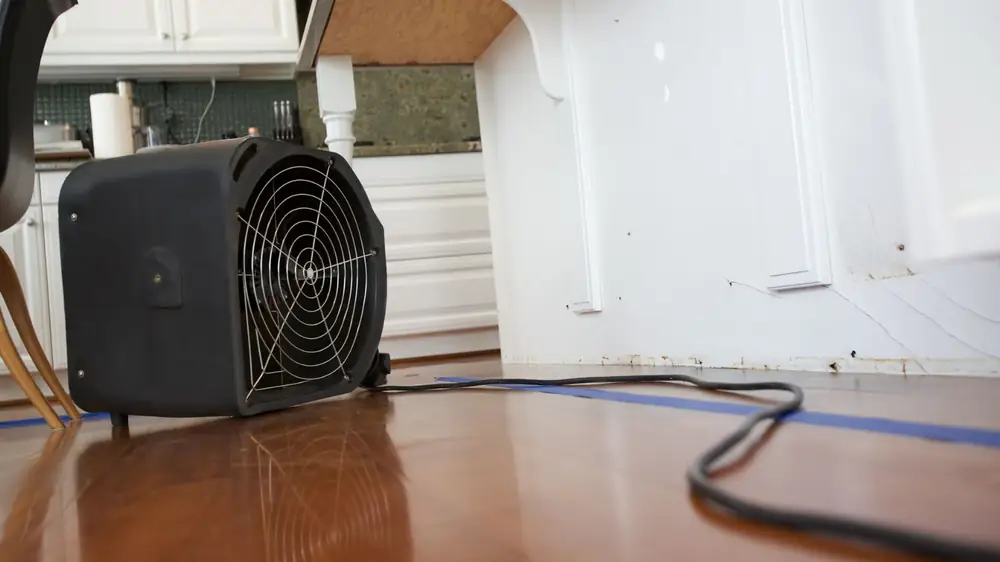
Drying mats pull water from hardwood or vinyl plank. Air movers and an LGR dehumidifier work the room and the cavities.
Decide save or replace
Readings are taken daily. Cabinets that dry stay. Swollen particleboard comes out, and the remaining boxes are checked again.
What can be saved and what usually gets replaced
Solid wood and plywood cabinet boxes that were wet briefly can dry and stay. Particleboard and medium-density fiberboard act like a sponge, swell at the edges and lose their strength. The U.S. EPA notes that porous, absorbent materials may have to be thrown away if they become moldy, and swollen cabinet bases fall in that group.
That is why cabinets often get removed. Taking out one swollen sink base and the toe-kick lets us dry the subfloor and the wall behind it. Reinstalling the same box after it has swelled seldom works, because doors and drawers will not line up.
Countertops are handled with care. Stone and solid-surface tops often come off and go back on. Laminate over particleboard is more likely to be replaced. Flooring under cabinets is the hardest to judge, so we check the subfloor with a meter.
What changes the cost of kitchen water damage
Scope and price come up front. For a kitchen they hinge on:
- Cabinet material. Particleboard is replaced more often than plywood or solid wood.
- How long the water sat. Weeks of weeping reach the subfloor, while a same-day burst may stay in the cabinet.
- Floor type. Tile, vinyl plank and hardwood each dry differently.
- Countertop and backsplash. Removing and resetting a top adds work.
- Rebuild scope. New cabinets, flooring and paint are a separate rebuild estimate.
Insurance and keeping the paper trail
Sudden and accidental plumbing damage is often covered, while slow leaks and neglect often are not. The California Department of Insurance notes that standard policies typically exclude flood, which is a different event from a pipe failure. Ask your insurer which category your loss fits, and check your policy for cabinet and countertop wording.
Photograph the sink bay, the toe-kick, the dishwasher cutout and the floor before demolition. If you rent, send the photos and a dated message to the landlord or manager the same day, because most households in the City of Los Angeles rent, per U.S. Census Bureau QuickFacts.
Mistakes to avoid in a wet kitchen
Sealing it up
Closing the cabinet door or laying a rug over damp flooring traps moisture. The U.S. EPA advises drying wet areas within 24 to 48 hours.
Caulking over wet seams
New caulk on a damp backsplash seals water in and hides the problem.
Running a fan only
A fan across the room does not reach a closed toe-kick cavity or a subfloor.
Pulling the dishwasher alone
Moving it can tear a supply line. Wait for the plumber or the crew.
Kitchen losses in Studio City homes and condos
Studio City is in the southeast San Fernando Valley, in the City of Los Angeles. Along Ventura Boulevard and the streets near it, many kitchens sit in condos and older houses where the sink and dishwasher share one wall with a neighbor or a bathroom.
That shared wall matters because a sink leak in one unit can dampen another. Tell the manager and any affected neighbor early. Drying in a shared wall also needs the wet side opened, so the work is planned with the building.
When water has spread past the kitchen into hallways or bedrooms, water damage repair explains the rebuild after drying, and structural drying covers the equipment and readings. We also respond in Sherman Oaks and North Hollywood, where Ventura Boulevard and Tujunga Wash tie the neighborhoods together.
Kitchen water damage questions in Studio City
Is emergency kitchen water damage restoration available in Studio City?
Yes. Call any time a sink, dishwasher or fridge line lets go. The dispatcher asks how far the water has run under the cabinets and what the floor is made of. A crew goes out the same day when available, and no arrival time is promised.
Why do you cut holes in the toe-kick?
Water collects in the cavity under the cabinets. Small access holes let air movers dry it without removing the whole cabinet run.
Can swollen particleboard cabinets be dried and kept?
Usually not. Once the board swells, it rarely returns to its original shape. Plywood and solid wood have a better chance.
How do I know if the subfloor under the cabinets is wet?
We read it with a moisture meter and a thermal camera, often through the sink bay or the dishwasher cutout.
Will my tile or hardwood floor survive?
Tile often does, depending on the subfloor. Hardwood and vinyl plank dry well if caught early, and may be replaced if cupped.
Does a dishwasher leak belong on this page?
The floor and cabinet damage does. The hose and supply line causes are on our appliance leak page.