
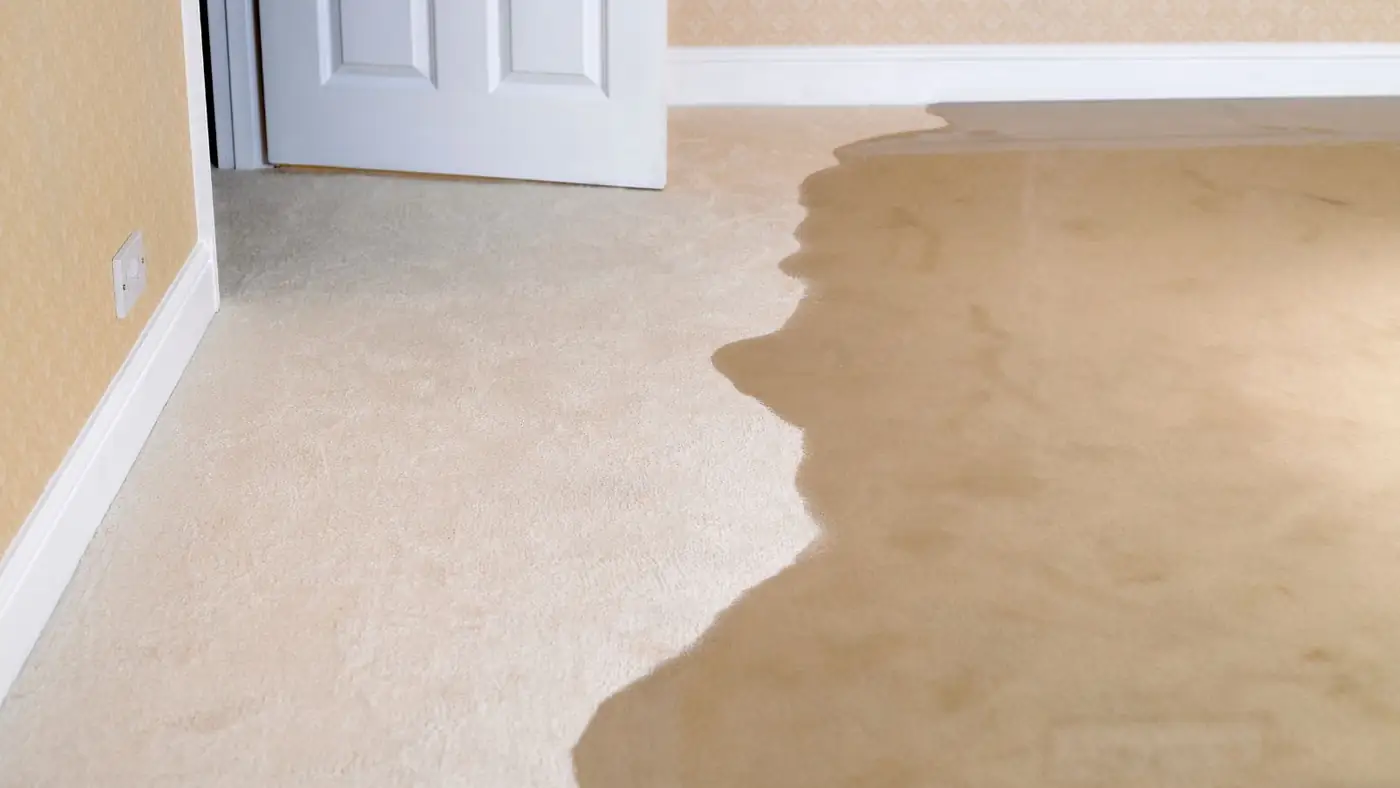
What carpet water damage is and why it spreads
Carpet water damage happens when a leak or flood soaks the carpet, the cushion beneath it and the tack strip at the edges. The face fibers dry quickly, but the pad underneath acts like a sponge and holds water for days.
That is why a floor can feel only damp on top while the pad is soaked. Water also wicks sideways under the carpet and upward into wall bases, which is why a small puddle by a washer can reach the next room.
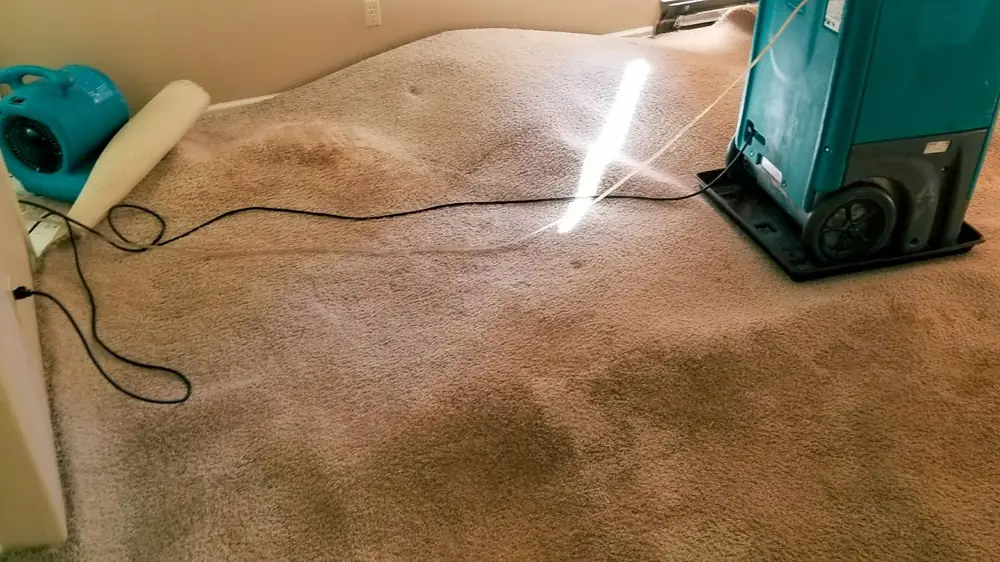
Signs the damage is deeper than it looks
| What you see or smell | Likely cause | What a crew does. |
|---|---|---|
| Squishy feel when you step | Saturated pad | Extract, then pull and replace pad. |
| Musty smell after a day or two | Moisture trapped under the carpet | Lift carpet, dry underneath, treat. |
| Brown stains along walls | Water wicking up the baseboard or tack strip | Check wall base with a meter. |
| Ripples or loose carpet | Delamination or a stretched backing | Lift, assess, restretch or replace. |
| Carpet edge peeling at the tack strip | Wet tack strip or glue failure | Replace strip when reinstalling. |
A moisture meter reading under the carpet is what confirms the diagnosis.
Safety steps before you touch a wet carpet
Stay out of the room if water is near outlets, floor lamps, a power strip or the panel. Cut power only if the panel is dry and you can reach it safely, and call 911 or the utility for any electrical or gas risk before calling the restoration line.
If the water came from a toilet, drain or sewage line, do not walk through it or press wet carpet with bare hands. Keep children and pets out. Lift furniture legs onto foil or blocks so stain from wood or metal does not transfer to the fibers.
Water category decides whether carpet stays
Clean water from a supply line or an overflowing sink, caught fast, can often be extracted and the carpet dried in place. The pad is often replaced even then, because it is hard to dry and costs less to swap than to nurse along.
Carpet that sat in contaminated water, such as a backed-up drain, is usually discarded. The U.S. EPA says porous materials like carpet may have to be thrown away if they become moldy, and for sewage or other contaminated water it points to professional help.
The same rule works against time. Clean water that sits for days stops being a clean-water job, so call early and ask the dispatcher what to expect.
Our carpet drying process
Extract the water
A truck-mounted or portable extractor pulls standing and absorbed water from the carpet and pad.
Float and inspect
The crew detaches the carpet at the tack strip, floats it off the pad and checks the subfloor with a meter.
Remove and treat
Pad is cut out and bagged, the floor is cleaned and an antimicrobial is applied where needed.
Dry and recheck
Air movers and dehumidifiers dry the floor and carpet, with readings logged until they hit the goal.
Floating the carpet lets air move under it, which is far faster than trying to dry through the backing. For the science behind the readings and equipment, see our page on structural drying.
Wet carpet is a clock
Call the 24/7 line and a crew can start extracting the same day when available.
Concrete versus wood subfloors in apartments and condos
Many Studio City apartments and condos have carpet over concrete, especially at ground level, while houses and upper units often sit over a wood subfloor. Concrete dries slowly and can release moisture for days. Wood can swell, cup or stain, and may need drying mats or panel replacement.
In stacked buildings, water often drips into the unit below, so tell your neighbor and the building manager right away. Upper-floor leaks can affect ceilings and walls downstairs even when the carpet above looks fine.
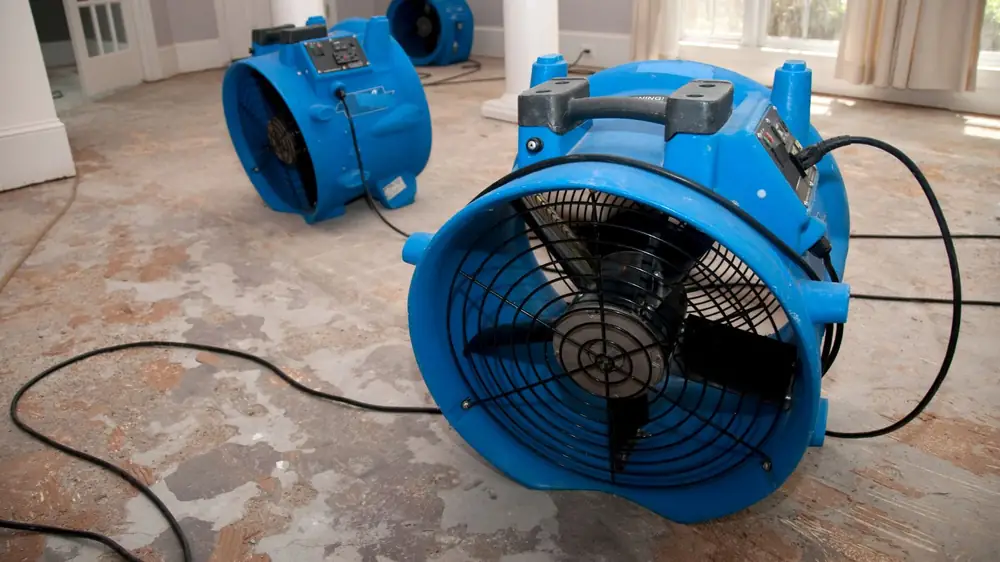
Stretching, odors and carpet types
- Carpet that was floated and dried can often be stretched and re-laid, though a worn backing may not hold.
- Delamination, where the backing separates from the face, usually means replacement.
- Odors that stay after drying often come from the pad or subfloor, not the fibers.
- Cut pile and looped berber react differently to wetting, and a crew will tell you what it sees on your particular carpet.
- Tack strip that has been wet for long is usually replaced, since it can stain and loosen.
What changes the cost and how insurance fits
You hear scope and price before work starts. Carpet totals depend on:
- Water category. Contaminated water means disposal and more protective steps.
- Square footage and pad. More wet floor means more extraction and more material to haul.
- Subfloor type. Concrete and wood need different drying methods and time.
- Time since the loss. A longer wet period often turns a dry-in-place job into a replacement.
- Replacement carpet. Install of new pad and carpet is a separate scope.
The California Department of Insurance notes that homeowners policies typically exclude flood, mudslide and debris flow, and flood insurance comes through the National Flood Insurance Program. A plumbing leak is a different category than storm water, so check your policy and ask your insurer before work starts.
Mistakes to avoid with wet carpet
- Waiting to see if it dries. The U.S. EPA says drying within 24 to 48 hours usually prevents mold growth.
- Using a store wet vac and calling it done, while the pad stays full of water.
- Covering the carpet with a rug or plastic, which traps moisture.
- Walking on wet carpet over a wood subfloor, which can push water deeper.
- Reinstalling furniture before readings show the floor is dry.
Wet carpet in Studio City rentals and homes
Most households in the City of Los Angeles rent, according to the U.S. Census Bureau, so a wet carpet is often a landlord question as much as a restoration one. Report the leak in writing right away, take photos, and ask who will arrange the work, because tenants should not discard flooring on their own.
Valley Village has many 1930s houses and a lot of apartment units, and Tujunga Wash forms its western boundary. If you live there, see Valley Village for local detail, and in Sherman Oaks the Los Angeles River forms the northern edge. For cleanup after the carpet is out, see water damage cleanup.
Carpet water damage questions in Studio City
Is emergency carpet water damage restoration available in Studio City?
Yes. Wet carpet is better handled early, so the line takes calls at any hour. Describe how long it has been wet. A crew is sent the same day when available, and we cannot say exactly when it arrives.
Can wet carpet be saved?
Often yes if the water was clean and extraction started quickly. If the water was contaminated or the carpet stayed wet for a long time, it is usually discarded.
Do you always replace the pad?
Often, since pad holds water and dries slowly. The crew checks it with a meter and tells you what it finds.
What is the tack strip and does it matter?
It is the narrow wood strip with pins that holds carpet at the walls. When it stays wet it can stain or rot, so it is often replaced during reinstall.
My carpet smells after it dried. Is something still wet?
Possibly. Odor often means moisture in the pad or subfloor, and a meter reading under the carpet will tell the crew whether more drying is needed.
I rent. Who should I call first?
Tell your landlord or property manager right away and ask who will arrange repairs. Keep photos and written notes.