
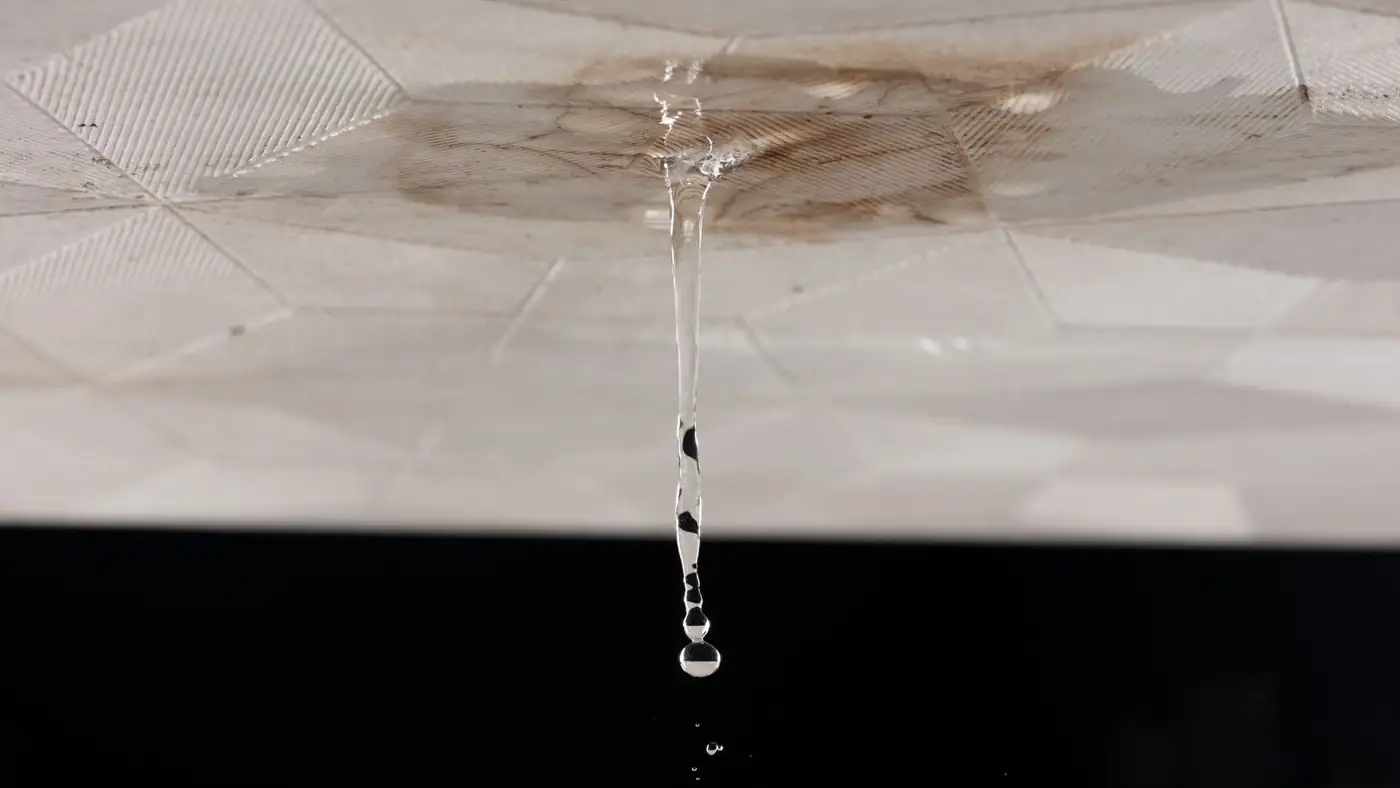
How rain gets through a roof and shows up indoors
Roof leak water damage starts small. A gap opens and a ceiling gets wet. Rain finds a gap, runs along a rafter or the underlayment, and drops onto insulation and drywall far from where it first got in.
The usual entry points are cracked or slipped tile, lifted shingles, failed flashing around a chimney or wall, a skylight curb, plumbing vent boots, roof valleys where two slopes meet, and gutters that overflow at the eave and push water back under the roofline.
That distance matters. The stain on your bedroom ceiling may sit several feet from the real opening, so the attic usually holds the answer. This page is about the roof as the single entry point. For runoff, wind-driven rain at windows and drains, see storm water damage.
What a roof leak looks like from inside
| What you see | What it usually means | How urgent |
|---|---|---|
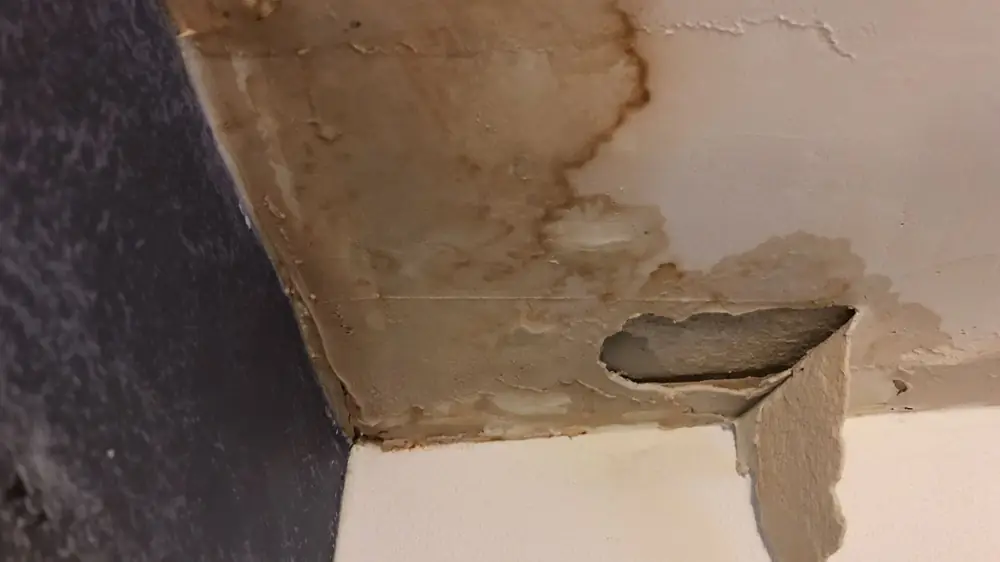
| Brown ring on the ceiling | Water soaked the board and may be wet again after each rain. | Same day if it grows. |
| Drip into a bucket | Water is moving freely through insulation and board right now. | Emergency. |
| Bubbled or sagging ceiling paint | Water is trapped above the paint and the board is heavy. | Emergency, the ceiling can drop. |
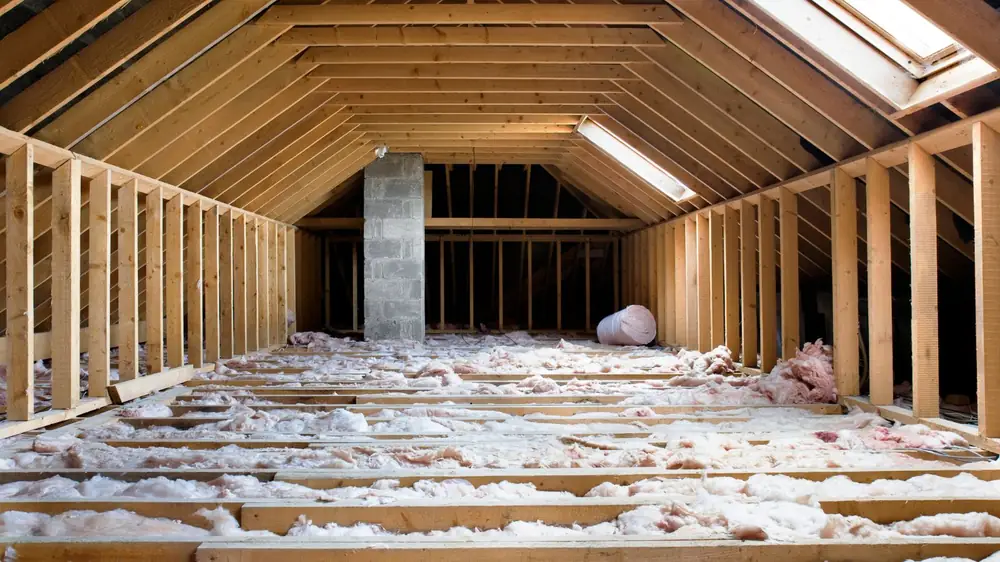
| Damp, matted attic insulation | Insulation has soaked up water and will hold it for days. | Same day. |
| Stain running down a wall | Water has followed framing into the wall cavity. | Same day. |
| Musty smell after rain | Something above or inside the wall is staying wet. | Soon, then check readings. |
A moisture meter and thermal camera tell us how far the water went, not the paint.
Safety steps for the first hour
Start with the ceiling. If the paint is bulging, keep people out from under it, because a ceiling full of water can fall without warning. Poke a small hole at the lowest point of the bulge with a screwdriver over a bucket, which lets the water out in a controlled way.
If water is near a light fixture, ceiling fan or outlet, leave the switch alone and cut power at the panel only if the panel is dry and safe to reach. Call 911 or the utility for any sparking, burning smell or buzzing before you call us.
Move furniture out from under the leak, lay plastic over what cannot move and photograph the stain. Do not climb onto a wet roof. A roofer has the gear and the footing, and a fall costs far more than a tarp.
Our process on the interior side
Find the wet area
A moisture meter and thermal camera map the ceiling, the walls below it and, where we can reach it, the attic, so we know what is wet before anything is cut.
Extract and remove
Extraction units pull standing water from floors and carpet. Saturated insulation and soft or sagging ceiling board come out, since both hold water and will not dry in place.
Dry the cavity
Air movers, drying mats and LGR dehumidifiers go to work on the ceiling joists, wall cavity and attic framing. We aim to reach dry readings inside the 24 to 48 hour window the U.S. EPA gives for preventing mold growth.
Contain and finish
Plastic containment keeps dust and damp air out of dry rooms, and HEPA air scrubbers run while demolition is under way. Rebuild of the ceiling comes after readings confirm the framing is dry.
Water is still coming through the ceiling
Call the 24/7 line and the dispatcher gives you steps to slow the spread while we get a crew moving.
What we do not do, and who fixes the roof
We do not repair roofs. A roofer fixes the source, and until that happens the next rain can soak everything we just dried. We schedule our work around the roofer, so the drying equipment, containment and access to the attic fit what the roofer needs.
Check any roofer before you hire. The California Contractors State License Board lets you look up a contractor license online, so do that before you sign. Ask for a written scope, and ask whether a temporary tarp can go on before a full repair.
What changes the cost of a roof leak cleanup
A roof leak job moves with these factors, and the price is explained before work starts:
- How much insulation is wet. Blown-in and batt insulation are removed by the bag, so a bigger attic area means more labor and hauling.
- Ceiling board affected. A single stained patch is a smaller job than a ceiling that sagged across a room.
- Attic access. Tight attics slow demolition and equipment placement.
- Drying time. Wet framing and long exposure usually need more equipment days.
- Finishes below. Wet carpet, floors and furniture add steps, and the rebuild is a separate scope.
On insurance, ask your insurer whether the leak counts as sudden storm damage or as wear. Policies often treat a roof worn out over time differently from a roof damaged by wind, and the California Department of Insurance notes that homeowners policies typically exclude flood. Rain through a roof is not flood, but your policy wording decides, so check it.
Hillside roofs and older housing in the valley
Roof leaks in Studio City, CA hillside and flat streets
Studio City sits against the Santa Monica Mountains, with homes climbing the slopes toward Wilacre Park and Coldwater Canyon Park. Hillside roofs take wind and runoff from steeper angles, and tall trees drop limbs and debris into valleys and gutters, so ask your roofer to check those spots after a storm.
NOAA climate normals for downtown Los Angeles, which is not Studio City itself, show about 14 inches of rain in an average year, mostly from late fall through winter. Roofs sit dry for months, then take rain all at once, which is when old flashing and cracked tile show their age. Check the roof in October, before the first storm.
Older housing stock leaks more often. Burbank has more than 62 percent of its housing built before 1970, and many Magnolia Park homes date from the 1940s, so we see aging roofs there. In Encino, larger houses on the mountain slope have bigger roof areas and more places for water to get in.
Mistakes to avoid and ways to prevent the next leak
- Do not paint over the stain. The board is still wet and the paint will bubble again.
- Do not leave wet attic insulation in place because the ceiling looks fine.
- Do not wait for a dry day to call. Damp framing starts to smell within days.
- Do not patch the roof yourself in the rain.
- Have flashing, vent boots and skylight seals checked before the wet season.
- Keep gutters clear so they do not overflow at the eave and push water under the roofline.
ANSI/IICRC S500 is the published standard for water damage restoration, and it is worth asking any company whether its crews work to it. For a wider look at how drying works after a leak, read about water mitigation and how plaster board is handled in drywall water damage repair.
Is emergency roof leak water damage cleanup available in Studio City?
Yes. Call at any hour, including during a rainstorm. The dispatcher asks where the water is entering, tells you how to catch drips and protect the room, and sends a crew the same day when one is free. We cannot promise a set arrival time.
Do you fix the roof?
No. A roofer repairs the opening. We handle the inside: extraction, wet insulation and ceiling board removal, drying and containment, and we work around the roofer.
How do I check a roofer?
Look up the license on the California Contractors State License Board site, ask for a written scope and ask about a temporary cover before the full repair.
Can I leave wet attic insulation until the roof is fixed?
It is better not to. Wet insulation holds water against the ceiling board for days and keeps the framing damp, so it normally comes out first.
Is a roof leak covered by insurance?
Often a sudden storm event is treated differently from wear over time. Ask your insurer how your policy reads, and keep photos of the stain, the attic and any roofer report.
Is rain through the roof the same as a flood?
No. Flood insurance is a separate NFIP policy for rising or moving water. Rain entering through a roof is a different kind of loss, so ask your insurer how yours is classified.