
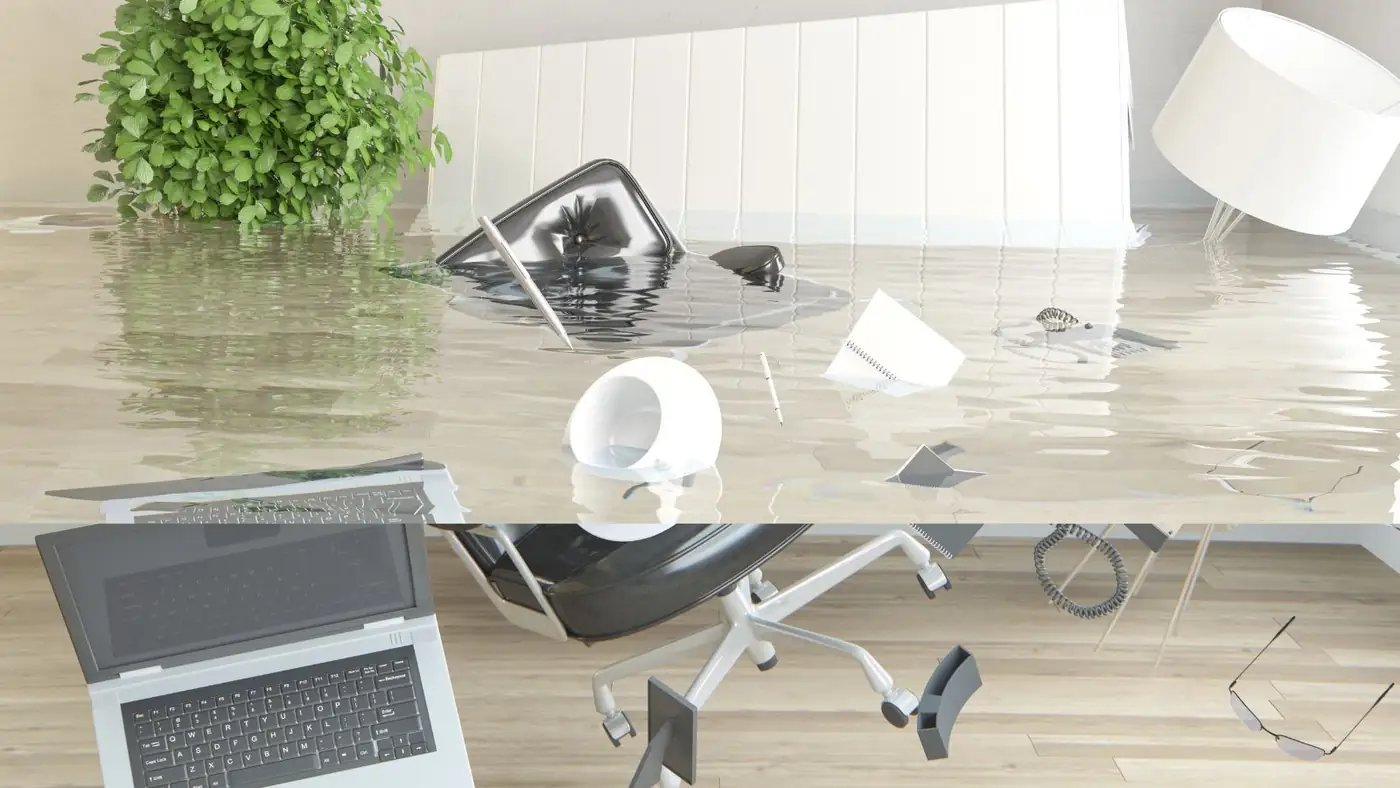
What commercial water damage restoration means
Commercial water damage restoration removes water from a commercial space and dries it. It follows a leak, a burst line or a sprinkler failure. It covers a single suite, a floor or a whole building, and it usually involves more than one party with a stake in the outcome.
The work we do is water extraction, wet material removal, structural drying and dehumidification, cleanup, and coordinating the rebuild scope. Ceilings, carpet, drywall and flooring are the usual casualties, and each one dries or fails on its own timeline.
What sets a commercial loss apart from a house is the building around it. Water leaves a suite through shared walls, ceiling cavities and floor penetrations, so a leak in one place can show up two doors down.
Who is responsible: read the lease first
The lease usually decides who pays for what, and it can split duties between the tenant and the landlord. Interior finishes and contents often sit with the tenant, while the structure, roof and building systems often sit with the landlord. Read yours before you assume.
Tell the landlord or property manager at once, in writing if you can, and keep a copy. Many leases set notice requirements, and late notice can cause arguments later. The property manager also knows the building, including where the water shut-off valves are, and that knowledge belongs to them, not to us.
What you see and what it means
| What you notice | What it often means | What to do |
|---|---|---|
| Stained or sagging ceiling tile | Water is sitting above the grid or in the plenum. | Keep people out from under it and call. |
| Drip from a sprinkler head or pipe | A supply line or fire sprinkler line has failed. | Call the building contact, then the dispatcher. |
| Carpet squishes underfoot | Water reached the pad or the glue-down layer. | Stay off it, photograph it and call. |
| Wet wall shared with the next suite | Water is moving between units. | Warn the neighbor through the property manager. |
| Musty smell with no visible water | Damp material is hidden in a cavity or under flooring. | Call before the smell spreads. |
| Baseboard lifting or paint bubbling | Moisture is wicking up the wall. | Request moisture readings. |
A moisture meter and a thermal camera find what the eye cannot.
Safety steps for the first hour
Get people out of any area where water meets light fixtures, outlets or floor-level equipment. If water reached electrical gear, call 911 or the utility before you call us, and cut power only if the panel is dry and safe to reach.
If the source is a fire sprinkler line, stop the supply only if it is safe to do so, and call the building contact right away. Do not guess at valves you cannot identify. The property manager or the building engineer knows which valve controls which zone.
Move paper files, electronics and inventory onto dry surfaces if you can do it safely. Photograph the water, the ceiling and the damaged items before anything is moved.
Water in a suite right now?
Call the 24/7 line. Ask the dispatcher what is possible for your space and your hours.
How we dry a commercial space
Find the wet zone
A moisture meter and a thermal camera map where water went, including behind walls and above the ceiling grid.
Extract and remove
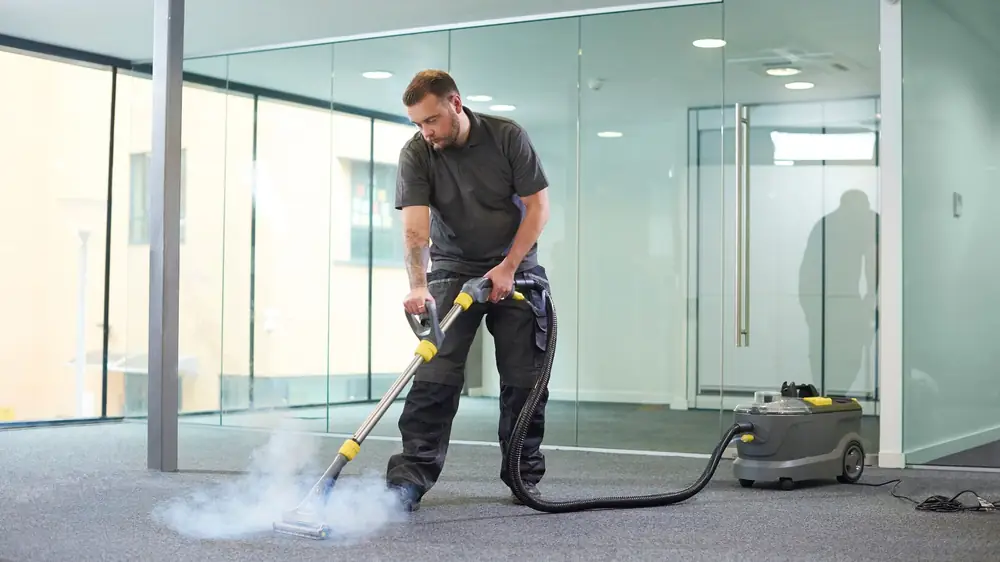
Extraction units pull standing water from carpet and slab. Saturated ceiling tile, carpet pad and wet drywall are removed.
Isolate and dry
Containment keeps the wet zone separate from the rest of the suite. Air movers, LGR dehumidifiers and drying mats run until readings fall.
Clean and scope the rebuild
Surfaces are cleaned, HEPA air scrubbers handle the air where needed, and a written scope covers what must be rebuilt.
We work to the ANSI/IICRC S500 water damage restoration standard as a reference, and you can ask any company whether its crews do the same. Where the situation allows, we can isolate the wet zone so the rest of the space stays usable. Ask the dispatcher what is possible around your business hours, because no after-hours schedule is promised in advance.
Drying structure is the core of this work, and the structural drying page explains the equipment and readings in detail. Once water and wet debris are out, water damage cleanup covers the cleaning that follows.
Ceiling tile, carpet and mold risk
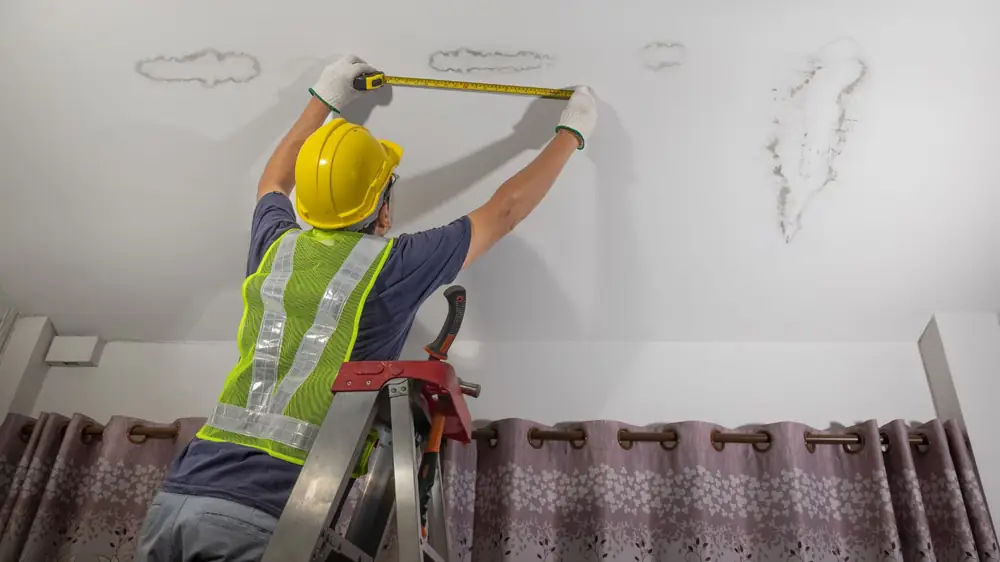
Suspended ceiling systems hold tile in a metal grid under a hidden cavity. Water pools in that cavity and then drops through tile one panel at a time. Wet tile sags, stains and often has to be thrown away, and the grid and insulation above it need to be checked.
Commercial carpet may be glue-down or on pad, and glue-down floors trap water against the slab. The U.S. EPA says porous materials like ceiling tile and carpet may need to be thrown away if moldy. It also says to dry water-damaged areas within 24 to 48 hours, and that mold usually will not grow if wet areas are dried in that window. With carpet or a drop ceiling, that clock is the reason to call early.
What changes the cost of a commercial loss
Scope and price are walked through first. Commercial totals depend on:
- Size of the wet zone. More square footage and more rooms mean more equipment and more days.
- Materials affected. Glue-down carpet, ceiling grids and insulation take different removal work than a hard floor.
- Water source. Clean supply water and contaminated water follow different handling.
- Access and timing. Working around occupied areas, hours or other suites changes how the job is staged.
- Rebuild scope. Coordinating the repair of ceilings, walls and flooring is a separate scope from drying.
Insurance and documentation for a commercial policy
General terms only. Sudden and accidental damage is often covered, gradual leaks often are not, and the California Department of Insurance notes that homeowners and commercial policies typically exclude flood. Ask your insurer what your commercial property policy covers.
Business interruption is a coverage term worth asking about, and nothing here promises it applies. Keep photos, moisture logs, a written scope and notes of every call. Those records are what an adjuster asks for, and we provide them as part of the job.
Mistakes to avoid in a shared building
- Waiting to tell the property manager, which leaves water moving into neighboring suites.
- Assuming the tenant or the landlord pays without reading the lease.
- Leaving wet ceiling tile or carpet in place to see if it dries.
- Taking down sagging tile without knowing what is above it.
- Hiring a rebuild contractor without checking a license on the California Contractors State License Board lookup.
What we handle and what we do not
We restore the water damage. We do not handle fire, roofing or plumbing trades. A broken pipe, a failed sprinkler head or a leaking roof needs the right trade to stop the source, and we work around them so drying starts as soon as the area is safe.
Permits for rebuild work are a city matter. In the City of Los Angeles, building permits run through LADBS, and the safe wording is to ask the city building department what your rebuild needs.
Commercial water damage near the Studio City corridor
Ventura Boulevard is the main commercial corridor in Studio City, and the buildings along it share walls and ceilings between suites. A leak on one side of a party wall is a coordination problem for the property manager as much as a drying problem for us.
The same boulevard runs through Sherman Oaks, where the Los Angeles River forms the northern edge. In North Hollywood, early orchards relied on a high water table near Tujunga Wash, a reminder that ground moisture and storm drainage can matter at slab level.
Is emergency commercial water damage restoration available in Studio City?
Yes. The line is open at night and on weekends for a leak in a shop, an office or a shared building. Tell the dispatcher who controls the water shut-off. A crew is sent the same day when available, with no promised arrival time.
Does the tenant or the landlord pay for water damage?
The lease decides. Read it, tell the property manager at once and ask your insurer how the policy applies.
Can you keep part of the space usable during drying?
Often we can isolate the wet zone so the rest stays in use. Ask the dispatcher what is possible for your layout and hours.
Will water from my suite damage the one next door?
It can. Water travels along shared walls and ceiling cavities, so the property manager should warn neighboring suites right away.
What should I give my insurer?
Photos, moisture logs and a written scope. Ask the insurer whether business interruption applies, since it is a coverage term and not a given.
What if a fire sprinkler line failed?
Stop the supply only if it is safe and call the building contact. A fire protection trade repairs the line, and we extract and dry.